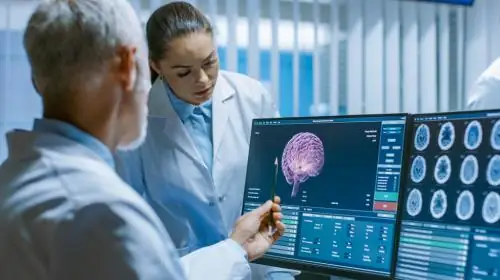
Brain Tumor Surgery Cost in India
Written By: Dr. Prerana
Medically Reviewed By: Dr. Ruchika
Last updated: March 26, 2026
Written By: Dr. Prerana
Medically Reviewed By: Dr. Ruchika
Last updated: March 26, 2026
A key factor in the brain tumor surgery cost in India is the neurosurgeon's fee. IndiCure connects you with highly skilled, board-certified neurosurgeons known for delivering exceptional outcomes. While fees may vary based on the surgeon's expertise, you can be assured that with IndiCure, you're choosing affordable treatment without compromising on safety or quality for your brain tumor surgery in India.
There are several treatment options available for brain tumor surgery. While one patient may require a craniotomy, another might benefit from gamma knife or proton therapy. As a result, the brain tumor surgery cost in India varies based on the procedure, your medical condition, and other individual factors.
Selecting an accredited medical facility with a skilled neurosurgeon and qualified medical staff is essential for the success of your brain tumor surgery in India. Larger cities in India generally provide superior medical facilities and more experienced surgeons, leading to higher costs. IndiCure Health Tours recommends surgical facilities in these larger cities to prioritize quality of care and ensure patient safety of our international guests.
The surgery-related expenses include the pre- and post-surgical expenses. The pre-surgical expenses are associated with the age and medical condition of the patient and thus the number and type of investigations required. Post-surgical expenses may include prescription medications and follow-up consultations.
At IndiCure Health Tours, we consolidate most of the expenses for your Brain Tumor Surgery in India to provide you with an inclusive and cost-effective package tailored to your budget and individual requirements. After receiving medical reports, your case manager will provide an estimated cost based on a discussion with the neurosurgeon.
The final Brain Tumor Surgery cost in India can however be confirmed after your face-to-face consultation with the neurosurgeon.

We Help you Choose the Right Treatment, Surgeon & Hospital

We Arrange Video/Telephonic Consultation with the Surgeon

We Assist you with Visa & Accommodation

We Receive you at the Airport and Drop you at Hotel/Hospital

We Assist you the at Hospital & Provide Post Operative Support
IndiCure Health Tours offers exclusive savings on your medical trip to India. We partner with best hospitals in India and negotiate special rates, ensuring you get the best possible price on your healthcare when you plan medical travel with us.
Here is a set of questions you should consider asking before commencing your medical tour for Brain Tumor Surgery in India.
Prepare to answer questions about your:
Your medical information is handled confidentially and is used only for patient support and treatment coordination.
A Brain tumor is referred to as an abnormal mass of cells in the brain that have no purpose. In general, tumors occur when cells divide and grow excessively in the body.
There are two types of brain tumors:
Brain tumors can occur at any age and the exact cause of having a brain tumor is not clear, but certain risk factors may predispose you to the risk of developing a primary brain tumor. These include;
Family history: Genetic inheritance of the brain tumor increases the risk of brain tumor.
Exposure to radiation: exposure to ionizing radiation like X-ray and radiation therapy increases the risk of brain tumors.
The symptoms of brain tumors depend on their size, type, and location. The most common symptoms of brain tumors are severe and frequent headaches, nausea, vomiting, blurring of vision, loss of peripheral vision or double vision, gradual sensory and motor loss of arms or legs, difficulty in maintaining balance, speech, confusion, seizures, hearing problems and many more.
Brain tumors are named according to their site, type of tissue, and the cell that generates the mass. These can be gliomas, meningiomas, and schwannomas which are most common. The other types of brain tumors are pituitary tumors, ependymomas, and primary lymphoma of the brain.
With the advent of modern technology and advanced surgical modalities, brain tumors are no longer as scary as they used to be a few years ago. With modalities such as Gamma knife, Cyberknife, and Novalis Tx radiosurgery, brain tumors are effectively treated at IndiCure-associated hospitals for brain tumor treatment in India.
The success rate at these hospitals is at par with the best neurosurgery hospitals in the world. Not only the infrastructure is state of the art, but neurosurgeons are highly trained and experienced, and the cost of brain tumor surgery in India at our affiliate hospitals is much more affordable.
Treatment of the brain tumor depends upon the size, location, and type of the tumor. The following are the most commonly used treatments for brain tumors:
If you are suffering from symptoms such as frequent headaches, nausea, vomiting, blurring of vision, loss of peripheral vision or double vision, gradual sensory and motor loss of arm or legs, difficulty in maintaining balance, speech, confusion, seizures, hearing problems, you need to see a neurologist immediately. If you are diagnosed with a brain tumor, you need brain tumor surgery as soon as possible.
Recovery depends upon the type of surgery done and the medical condition of the patient. For procedures such as open surgery or Craniotomy, you would stay at the hospital for 8-10 days and recovery would take around 3-4 weeks, while with a non-invasive procedure such as gamma knife or cyberknife, recovery is much faster.
The result of brain tumor surgery depends upon the size, location, and type of tumors. If the tumor has been completely removed, you can expect to lead a completely normal life, whereas in cases when it is secondary or cancerous, further treatment may be required and results depend upon the prognosis.
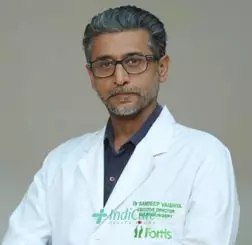
Dr. Sandeep Vaishya
MBBS, MS, MCh, Fellowship
22+ Years of Experience
Dr. Sandeep Vaishya is one of India's most skilled and well-known neurosurgeons. He has been connected with some of India's leading hospitals for over 22 years and has a flourishing practice. He is a world-renowned surgeon treating brachial plexus injuries and a pioneer in Gamma Knife surgery in South Asia. Dr. Sandeep Vaishya is regarded as one of India's top brain and spine surgeons.

Dr. Mohit Bhatt
MBBS, MD, DM
32+ Years of Experience
Dr. Bhatt's expertise includes Deep Brain Stimulation, Movement Disorders, Wilson's Disease, Parkinson's Disease, Progressive Supranuclear Palsy, Brain Iron Disorders, Neurogenetic illnesses, dystonia, tics, tremor, and myoclonus. Numerous national and international papers are to his credit, and He lectures on deep brain stimulation at scientific meetings, CMEs, and international conferences.

Dr. (Prof) Deepu Banerjee
MBBS, MS, MCh
34+ Years of Experience
Dr. (Prof) Deepu Banerji is a renowned neurosurgeon with over 34 years of expertise. He is a member of the Asian Congress of Neurological Surgeons, the Indian Society of Skull Base Surgery, the Indian Society of Neuro-oncology, the International Society for Pituitary Surgeons, and the American Association of Neurological Surgery. He has numerous papers in international and national magazines, as well as numerous chapters in medical books.
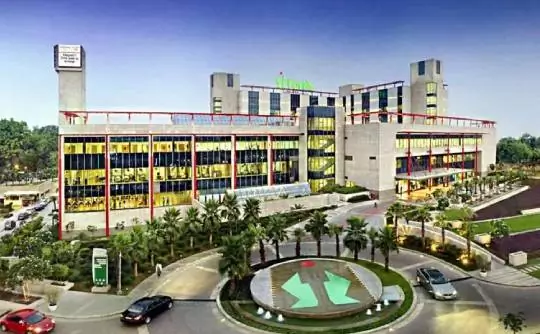
Fortis Memorial Research Institute
Gurgaon
Fortis Memorial Research Institute (FMRI), the flagship hospital of Fortis Healthcare, is a multi-specialty, quaternary care hospital and is counted among the best hospitals in India and the world. The hospital is considered as "Mecca of Healthcare" and a referral hospital, not only in the entire Asia Pacific but much beyond.
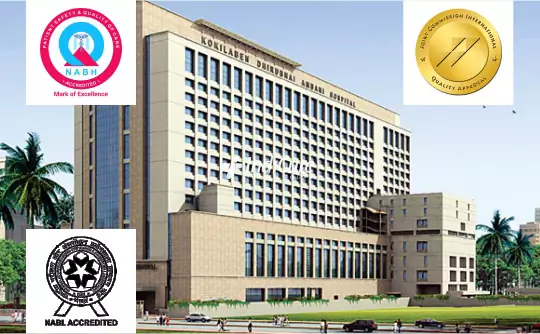
Kokilaben Dhirubhai Ambani Hospital
Mumbai
Kokilaben Dhirubhai Ambani Hospital is one of the most advanced and modern hospitals in India. It is a state-of-the-art tertiary care multi-specialty hospital located in the biggest suburb of Mumbai- Andheri. The hospital was launched by Reliance Group in 2008.
Patients are typically advised to attend physiotherapy, speech therapy, and occupational therapy sessions on a regular basis following surgery. The goal of these treatments is to hasten recovery and allow patients to resume their normal daily activities as soon as possible.
The likelihood of survival is determined by the kind, stage, and grade of breast cancer. When compared to adults, children have a higher chance of surviving.
Speech impairments, muscle weakness, coordination issues, and balancing difficulties are all possible side effects of brain surgery.
The excision of a tumor from the brain can take anywhere from four to six hours.
Depending on the type of surgery performed, you may or may not be able to drive a car. After a craniotomy, you cannot drive for at least six months.
Memory loss can occur as a result of brain surgery, radiation therapy, or chemotherapy, but only in rare situations. Swelling in the brain following brain surgery might impair its function. Memory issues are one example, but they are only transient.
In addition to the brain tumor surgery cost in India, it's important to account for other expenses when planning your medical trip. These include the cost of meals during your stay, which will vary based on your dietary preferences and accommodation choices. Airfare is another key consideration, with prices fluctuating depending on your departure location and the time of booking. Ground transportation, such as taxi fares, ride-sharing services, or rental car fees, also adds to the overall cost.
Furthermore, accommodation during your recovery is crucial. You may choose to stay in a hotel near the medical facility for convenience, or opt for more budget-friendly alternatives like guesthouses or serviced apartments. The length of your stay will affect your accommodation costs, especially if you require an extended recovery period before flying home.
By factoring in these additional expenses, you can create a comprehensive budget for your brain tumor surgery in India. Careful planning ensures that you are well-prepared financially, allowing for a smoother and more comfortable recovery during your stay.
Beyond treatment coordination, IndiCure also helps international patients experience a more comfortable and meaningful healthcare journey in India.

We assist patients in accessing wellness retreats focused on relaxation, restorative care, and recovery support.
Know More >>
IndiCure helps patients access Ayurveda programs through selected wellness centers and experienced practitioners.
Know More >>
From cultural experiences and historical destinations to local guidance during recovery, IndiCure helps international visitors experience India in a comfortable and supportive environment.
Know More >>With over 15 years of experience, IndiCure supports international patients by coordinating both the clinical and travel aspects of treatment in India. We work with a network of board-certified surgeons and JCI- and NABH-accredited hospitals that follow established safety and clinical protocols.
Our team manages each stage of the journey, including medical evaluations, visa assistance, travel planning, and accommodation arrangements—providing a structured and transparent process from initial consultation through follow-up care.
The content provided on this website is intended for general educational purposes only and does not constitute professional medical advice, diagnosis, or treatment. While we maintain a comprehensive editorial policy to ensure the accuracy and reliability of our information, this content should not be utilized as a substitute for professional clinical care.
Individual Results: All "before and after" photographs are illustrative examples of potential outcomes; actual surgical results vary significantly by individual.
Mandatory Consultation: We strongly advise a personal, in-person evaluation with a board-certified surgeon to assess your specific medical needs and realistic procedural goals.
Surgical Risk: It is vital to maintain realistic expectations and fully understand potential complications before electing for surgery.