Bariatric Surgery in India
Safe. Esay. Affordable.
Written By: Dr. Shivya
Medically Reviewed By: Dr. Ruchika
Last updated: March 26, 2026
Written By: Dr. Shivya
Medically Reviewed By: Dr. Ruchika
Last updated: March 26, 2026
IndiCure is the most trusted name when it comes to medical tourism for Bariatric surgery in India. We owe our reputation to a highly personalized and meticulous approach. We choose to work with only a select few Bariatric surgeons and hospitals in India who meet our quality criteria to give you the best care and personalized attention. So, when you choose IndiCure, you are sure to be in Safe hands.
We view every patient as a member of the IndiCure family and are proud to have helped men and women of all ages from more than 50 countries to realize their weight-loss goals. We invite you to join the family.
Bariatric Surgery is the beginning of your weight loss journey. You will have to follow a healthy lifestyle and a healthy diet to lose weight and keep it off. Our Expert Nutritionists will provide you with personalized plans for your quick recovery and all through your journey to help you achieve the best possible results.
We will also connect with our previous patients who have had their Bariatric Surgery in India with us, so you can experience the highlights and challenges of life after surgery alongside others who have had a similar experience.
We are here to lead you down the path to weight loss success. If you are frustrated with a cycle of small weight loss victories followed by disheartening weight gain, we are here to help you. We have patients from 50+ countries who trust us for their bariatric surgery and weight loss.
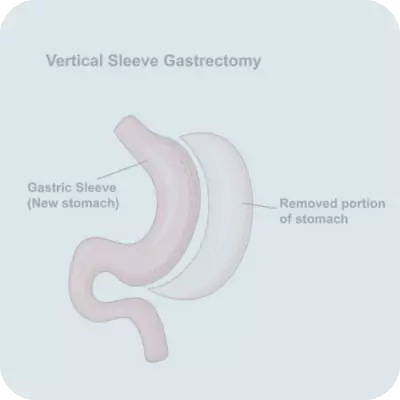
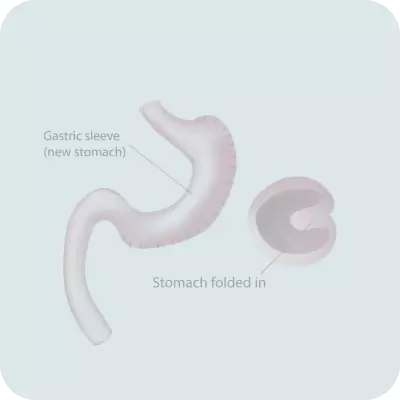
Gastric sleeve surgery is one of the best and most popular weight loss surgery procedures which works by resecting a major portion of the stomach by creating a "sleeve" or banana-shaped pouch without disrupting normal connections with the esophagus and small intestine.
Cost Starts from US $5000
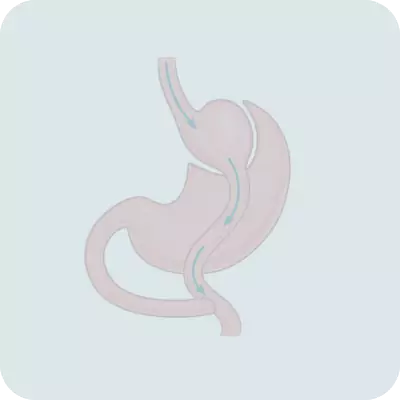
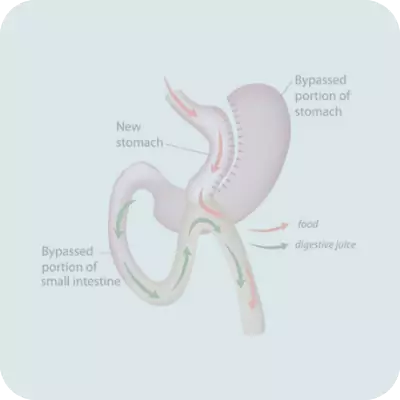
Read More >The surgery makes the stomach smaller in size, which reduces the amount of food that the stomach can accept, thereby reducing the food intake. The food bypasses a section of the small intestine resulting in lesser calorie absorption by the body thus resulting in weight loss.
Cost Starts from US $6000
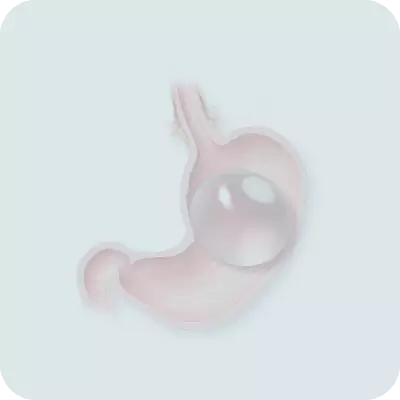
Read More >Intra Gastric Balloon, (IGB) also known as the Gastric Balloon is a simple, non-invasive procedure to treat excessive weight. It involves placing a balloon inside the stomach to reduce hunger and food intake, thereby resulting in weight loss.
Cost Starts from US $4000
Read More >Mini gastric bypass, also called One Anastomosis Gastric Bypass, is surgery for morbidly obese. The procedure gives excellent results and the major benefit is that it is less invasive than a classic gastric bypass.
Cost Starts from US $5000
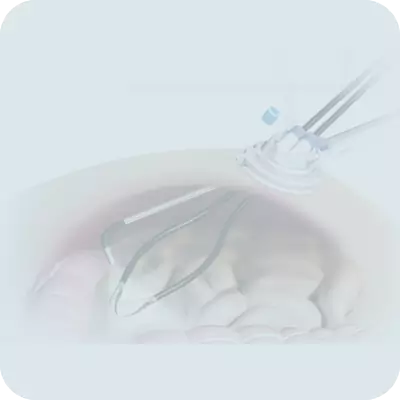
Read More >As its name suggests, SILS is laparoscopic surgery performed through just one small incision. While SILS can be used successfully in a variety of surgeries, it is now becoming a very popular choice for patients who are looking to undergo bariatric surgery.
Cost Starts from US $6000
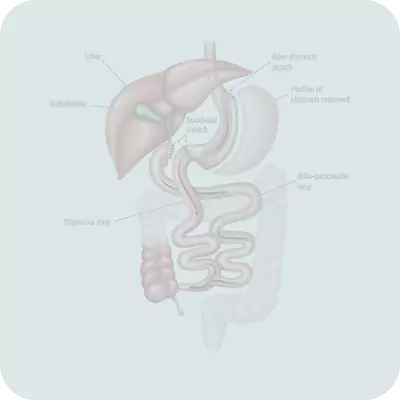
Read More >Duodenal switch surgery is usually advisable for people who are significantly obese, have a Body mass index (BMI) of 50 or above, or a BMI of 40 or above as well as serious type 2 diabetes and other serious health issues.
Cost Starts from US $6500
Read More >Revision Bariatric surgery is used to change or repair one of the many different forms of weight loss surgery used to treat severe obesity. While the Roux-en-Y gastric bypass and Mini Gastric Bypass operations are both effective, they do require adjustment from time to time.
Read More >Laparoscopic adjustable gastric band, popularly known as "Lap band" or "Gastric band" is a minimally invasive, swift, reversible, and adjustable weight loss surgery procedure that entails placing an inflatable silicone device or band around the top portion of the stomach.
Cost Starts from US $6000
Read More >Years of Experience

Patients Assisted Worldwide
Countries Served

Most Preferred Medical Tourism Brand

Google Rating from Global Patients

Dr. Raman Goel
MBBS, MS, FICS, FIAGES, FALS
27+ Years of Experience
Dr. Ramen Goel, a highly qualified gastro-intestinal surgeon with more than 25 years of experience, is one of India's bariatric surgery pioneers. He has committed the past 20 years to performing a wide range of procedures using modern laparoscopic techniques. He is a member of the Surgical Review Corporation's International Review Committee, which awards Centers of Excellence in Bariatric Surgery.

Dr. Sanjay Borude
MBBS, MS, FICS, FIAGES, FALS, IFSO
30+ Years of Experience
Dr. Sanjay Borude is a highly renowned bariatric surgeon with more than 26 years of experience in the field. He has the LIMCA BOOK OF RECORDS for BARIATRIC SURGERY ON 11 MONTHS OLD BABY. Performed ASIA's first Google Eye' Bariatric Surgery with Google team. He is a pioneering surgeon in the field of obesity surgery in India.

Dr. H. V. Shivram
MBBS, MS, FICS, FRCS
27+ Years of Experience
Dr. Shivaram H V is one of the country's most renowned GI and bariatric surgeons, with a long list of groundbreaking studies and publications to his name. A huge number of national and international patients have benefited from his expertise in laparoscopic surgery, pancreatic surgery, gastro-intestinal surgery, and bariatric/metabolic surgery.

Wockhardt Hospital
Mumbai
Wockhardt Hospitals is the branch of the leading Wockhardt pharmaceutical company in India. The company is more than four decades old and is present in more than 20 countries around the globe. Wockhardt has 9 hospitals in India in Mumbai, Nagpur, Rajkot, Nashik, and Surat. Wockhardt hospitals have entered into a strategic alliance with Partners Medical International, USA, whereby the group has access to Harvard's expertise in clinical and surgical fields.

Fortis La Femme Hospital
Delhi
Fortis La Femme, founded in 2004, is a multi-specialty hospital that provides care for all periods of a woman's life, including birth, motherhood, menopause, and beyond. The hospital was named the winner of the ‘Most Popular Maternity Hospitals' category in Child magazine's Most Popular Awards 2013. More than 11,000 deliveries and 7,500 gynecological operations have been performed.

Your treatment options depend on how much you weigh. You can calculate your BMI using this simple tool:
We recommend you speak to your doctor if your BMI is below 18.5 or above 25.

I highly recommend IndiCure Health Tours and especially Dr. Ruchika who made it so easy, she took care of us from the get-go I couldn't believe how smooth it all went.
Ruth, USA

Thankful to IndiCure for arranging this trip for me. Guided me every step of the way and made the entire process so easy for me.
Kim Richards, New Zealand

I am glad that I chose India & IndiCure for my Bariatric Surgery. They exceeded my expectations in all aspects.
Tonny Hollis, Australia
Bariatric surgery also known as weight loss surgery refers to the surgical procedure which changes the digestive mechanism of the body so as to limit the food intake or absorption of nutrients by the body, resulting in weight loss. They are referred to as restrictive or malabsorptive procedures.
Restrictive procedures are Intra gastric ballooning, Lap Band, and Sleeve gastrectomy. They limit the amount of food that the stomach can hold but do not interfere with the body's normal digestion. Malabsorptive procedures like Gastric bypass and mini-gastric bypass, bypass the small intestine so that fewer calories are absorbed by the body.
The amount of weight loss is quite individualistic and depends on the procedure and the individual. With a lap band, you can expect to lose between 50-60 percent of the excess weight over a period of 2-3 years, while with Gastric bypass, you can lose up to 80 percent of the excess body weight in one to two years. A regain of up to 10 percent of your excess body weight is common. Your goal weight would be set by you and the surgeon determined by your height, lifestyle, and other things.
You are a good candidate for bariatric surgery if:
People with an inflammatory disease, severe heart or lung disease, esophageal, stomach or intestinal problems, cirrhosis, or who are pregnant are not candidates.
You would be asked to fill out a questionnaire for the assessment by the surgeon and he shall accordingly guide you with the option best suited for you.
Bariatric surgery cost in India depends upon the type of procedure, surgeon, facility, and the city where you choose to undergo the surgery. We have specially negotiated rates for our clients for bariatric surgery in India. The cost of bariatric surgery in India starts from USD 3900 for Intra-gastric ballooning to USD 6000 for gastric bypass surgery. It is worthwhile to note that the cost of similar surgery in the US costs between 20,000 to 35,000 dollars.
There is absolutely no compromise on the quality. The cost of bariatric surgery in India is less because of two main reasons:
Low cost of endowment in India – Qualified doctors, surgeons, nursing staff, lower investments costs, subsidies by government to private healthcare sector are more as compared to other countries
An exchange rate regime, which is favorable to India (indicative rates only, may not be currently applicable)
1 USD= 75 Indian rupees
1 GBP= 100 Indian rupees
1 Euro= 85 Indian rupees
Yes, a lot of people from the US and various other countries like UK, Canada, Australia, and New Zealand etc. get their bariatric surgery in India. The most important reason is the cost. Since bariatric surgery is not covered, many people keep postponing the surgery, jeopardizing their health and sometimes their lives. Since the cost of bariatric surgery in India is much affordable, and there is absolutely no compromise in the quality of care, getting bariatric surgery in India is the best option.
Yes, a lot of people from the US and various other countries like UK, Canada, Australia, and New Zealand etc. get their bariatric surgery in India. The most important reason is the cost. Since bariatric surgery is not covered, many people keep postponing the surgery, jeopardizing their health and sometimes their lives. Since the cost of bariatric surgery in India is much affordable, and there is absolutely no compromise in the quality of care, getting bariatric surgery in India is the best option.
Some insurance companies do cover bariatric surgery. You need to check with your provider if they cover bariatric surgery. We shall help you with all the paperwork
Most weight loss surgery patients find that their obesity related health conditions either improve or disappear completely as they lose weight. If you have medical conditions such as type 2 diabetes, high blood pressure (hypertension), high cholesterol, obstructive sleep apnea, and knee pain, you will see health improvements as you begin to lose weight. Most patients experience improvement in body image and reduction in the symptoms of depression have also been noted after weight loss surgery. Women have also experienced improved fertility and pregnancy outcomes.
Your medical information is handled confidentially and is used only for patient support and treatment coordination.
We take pride in having a few of the best bariatric surgeons in India on our panel to give you nothing but the best results for your bariatric surgery in India. We offer a range of hospital and hotel options to choose from to suit your budget and other requirements.


We only work with board-certified plastic surgeons in India who meet rigorous international safety protocols.

Our partner hospitals hold prestigious JCI and NABH accreditations, ensuring you receive care in a sterile, high-tech environment.

Forget the stress of planning. We provide a personal guide to walk you through the medical process and handle all the heavy lifting.
Beyond treatment coordination, IndiCure also helps international patients experience a more comfortable and meaningful healthcare journey in India.

We assist patients in accessing wellness retreats focused on relaxation, restorative care, and recovery support.
Know More >>
IndiCure helps patients access Ayurveda programs through selected wellness centers and experienced practitioners.
Know More >>
From cultural experiences and historical destinations to local guidance during recovery, IndiCure helps international visitors experience India in a comfortable and supportive environment.
Know More >>With over 15 years of experience, IndiCure supports international patients by coordinating both the clinical and travel aspects of treatment in India. We work with a network of board-certified surgeons and JCI- and NABH-accredited hospitals that follow established safety and clinical protocols.
Our team manages each stage of the journey, including medical evaluations, visa assistance, travel planning, and accommodation arrangements—providing a structured and transparent process from initial consultation through follow-up care.
The content provided on this website is intended for general educational purposes only and does not constitute professional medical advice, diagnosis, or treatment. While we maintain a comprehensive editorial policy to ensure the accuracy and reliability of our information, this content should not be utilized as a substitute for professional clinical care.
Individual Results: All "before and after" photographs are illustrative examples of potential outcomes; actual surgical results vary significantly by individual.
Mandatory Consultation: We strongly advise a personal, in-person evaluation with a board-certified surgeon to assess your specific medical needs and realistic procedural goals.
Surgical Risk: It is vital to maintain realistic expectations and fully understand potential complications before electing for surgery.