Gastric Bypass Surgery Cost in India
Written By: Dr. Shivya
Medically Reviewed By: Dr. Ruchika
Last updated: March 26, 2026
Written By: Dr. Shivya
Medically Reviewed By: Dr. Ruchika
Last updated: March 26, 2026
A significant component of the Gastric Bypass Surgery Cost in India is the bariatric surgeon's fees. IndiCure recommends highly experienced, skilled, board-certified surgeons who can deliver excellent results. While the charges may vary based on the surgeon's experience, you can be confident that you are in safe and capable hands when opting for bariatric surgery in India with IndiCure.
Selecting an accredited medical facility with skilled and qualified medical staff is essential for the success of your Gastric Bypass surgery in India. Larger cities in India generally provide superior medical facilities and more experienced surgeons, leading to higher costs. IndiCure Health Tours recommends surgical facilities in these larger cities to prioritize quality of care and ensure patient safety of our international guests.
The surgery-related expenses include the pre- and post-surgical expenses. The pre-surgical expenses are associated with the age and medical condition of the patient and thus the number and type of investigations required. Post-surgical expenses may include prescription medications and follow-up consultations.
At IndiCure Health Tours, we consolidate most of the expenses for your Gastric Bypass Surgery Cost in India to provide you with an inclusive and cost-effective package tailored to your budget and individual requirements. After receiving medical reports, your case manager will provide an estimated cost based on a discussion with the surgeon.
The final Gastric Bypass Surgery Cost in India can however be confirmed after your face-to-face consultation with the bariatric surgeon.

We Help you Choose the Right Treatment, Surgeon & Hospital

We Arrange Video/Telephonic Consultation with the Surgeon

We Assist you with Visa & Accommodation

We Receive you at the Airport and Drop you at Hotel/Hospital

We Assist you the at Hospital & Provide Post Operative Support
Here is a set of questions you should consider asking before commencing your journey for Gastric Bypass Surgery in India.
Prepare to answer questions about your:
Your medical information is handled confidentially and is used only for patient support and treatment coordination.
Gastric bypass or Roux-en-Y gastric bypass is a type of weight loss surgery that works by making the stomach smaller and the digestive system shorter. The gastric bypass divides the stomach into a small upper pouch and a larger remnant pouch and then re-arranges the small intestine to allow both pouches to stay connected to it accordingly.
The surgery makes the stomach smaller in size, which reduces the amount of food that the stomach can accept, thereby reducing the food intake. The food bypasses a section of the small intestine resulting in lesser calorie absorption by the body thus resulting in weight loss.
Gastric Bypass is one of the final steps one can take to combat weight problems. Its results are immediate, long-lasting, and beneficial especially when accompanied by balanced and sustained lifestyle changes.
You are a good candidate for gastric bypass surgery if you are between 18 to 60 years of age and have a Body Mass Index of over 40, or a Body Mass Index between 35 and 40 with obesity-related medical complications, such as diabetes, heart disease, or sleep apnea.
A small pouch is created in the stomach using incisions and staples. This pouch is about the size of a golf ball, significantly reducing the stomach's capacity.
The newly formed stomach pouch is then connected to the lower part of the small intestine, bypassing both the remaining stomach and the upper section of the small intestine.
The upper small intestine, still connected to the bypassed stomach, is reattached to the lower intestine, allowing digestive juices to mix with food.
You would need to stay at the hospital for 3-4 days following a gastric bypass in India to see that you are recovering well. You will have some pain and discomfort after the procedure which can be managed with medication. You would be given a diet plan by your dietitian along with instructions for sipping plain water, followed by other liquids. You need to follow the dietary plan prescribed by your dietician and surgeon for your smooth recovery. You can resume normal day-to-day activities in around a week's time. You would need to refrain from exercising and doing heavy physical work for six to eight weeks.
Weight loss after gastric bypass surgery is often dramatic. On average, patients lose 70- 80% of their extra weight in about one to two years of the operation. Right after the surgery, most patients lose weight quickly and continue to lose for 18 to 24 months after the procedure.

Dr. Raman Goel
MBBS, MS, FICS, FIAGES, FALS
27+ Years of Experience
Dr. Ramen Goel, a highly qualified gastro-intestinal surgeon with more than 25 years of experience, is one of India's bariatric surgery pioneers. He has committed the past 20 years to performing a wide range of procedures using modern laparoscopic techniques. He is a member of the Surgical Review Corporation's International Review Committee, which awards Centers of Excellence in Bariatric Surgery.
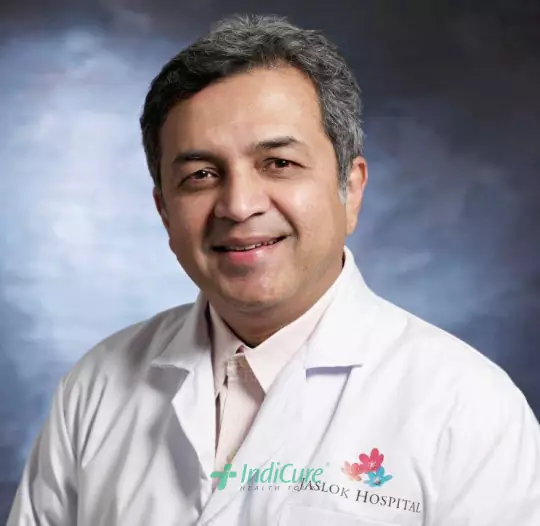
Dr. Sanjay Borude
MBBS, MS, FICS, FIAGES, FALS, IFSO
30+ Years of Experience
Dr. Sanjay Borude is a highly renowned bariatric surgeon with more than 26 years of experience in the field. He has the LIMCA BOOK OF RECORDS for BARIATRIC SURGERY ON 11 MONTHS OLD BABY. Performed ASIA's first Google Eye' Bariatric Surgery with Google team. He is a pioneering surgeon in the field of obesity surgery in India.
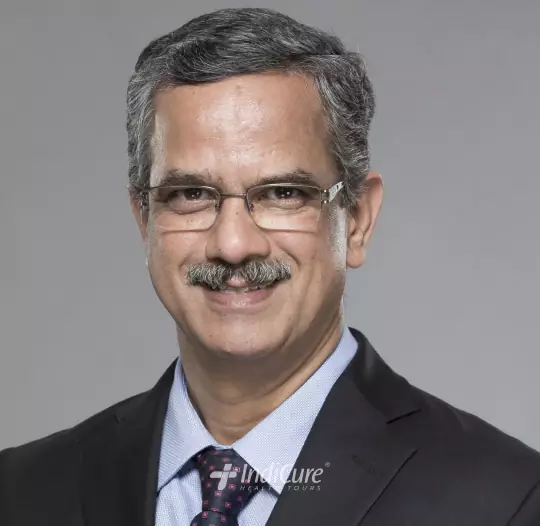
Dr. H. V. Shivram
MBBS, MS, FICS, FRCS
27+ Years of Experience
Dr. Shivaram H V is one of the country's most renowned GI and bariatric surgeons, with a long list of groundbreaking studies and publications to his name. A huge number of national and international patients have benefited from his expertise in laparoscopic surgery, pancreatic surgery, gastro-intestinal surgery, and bariatric/metabolic surgery.
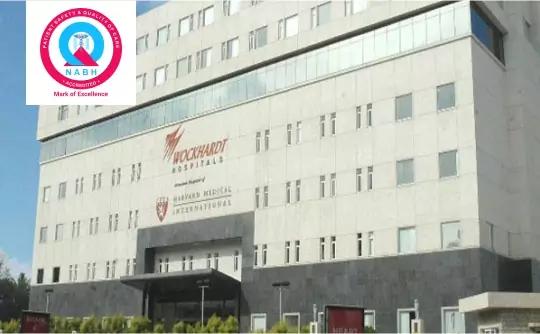
Wockhardt Hospital
Mumbai
Wockhardt Hospitals is the branch of the leading Wockhardt pharmaceutical company in India. The company is more than four decades old and is present in more than 20 countries around the globe. Wockhardt has 9 hospitals in India in Mumbai, Nagpur, Rajkot, Nashik, and Surat. Wockhardt hospitals have entered into a strategic alliance with Partners Medical International, USA, whereby the group has access to Harvard's expertise in clinical and surgical fields.

Fortis La Femme Hospital
Delhi
Fortis La Femme, founded in 2004, is a multi-specialty hospital that provides care for all periods of a woman's life, including birth, motherhood, menopause, and beyond. The hospital was named the winner of the ‘Most Popular Maternity Hospitals' category in Child magazine's Most Popular Awards 2013. More than 11,000 deliveries and 7,500 gynecological operations have been performed.
Years of Experience

Patients Assisted Worldwide
Countries Served

Most Preferred Medical Tourism Brand

Google Rating from Global Patients
Yes, Gastric Bypass is a major surgery, however, it is usually very safe if performed by a well-trained and experienced bariatric surgeon at a well-equipped medical facility. The procedure involves lifestyle changes which include dietary and regime changes.
The procedure is done laparoscopically whereby 4-5 small incisions are given and thus has relatively shorter downtime than open surgery.
All surgeries have some degree of pain involved. You may experience moderate amounts of pain after a Gastric Bypass surgery, however, each patient has individual levels of pain tolerance. You may have some discomfort at the incision site or as a result of how your body was positioned during the procedure.
If your pain stops you from moving, let your doctor know. Oral drugs are used to treat pain, and they function best when taken regularly, maintaining a consistent amount of medication in the bloodstream keeps pain well under control.
Yes, though there is scarring after a Gastric Bypass surgery, however, the scars are quite small. Since gastric bypass surgery is performed laparoscopically, where tiny incisions in the range of 0.5-1.5cm are given, the scars also are very small.
Any laparoscopic surgery has a faster recovery and relatively shorter downtime than open surgery. Stay at the hospital after a Laparoscopic Gastric Bypass surgery is generally 2-3 days and most patients return to normal activities within 3 to 5 weeks.
Yes, Gastric Bypass surgery can be reversed, however, reversing it would necessitate a procedure of equal or even higher magnitude. It is a complex procedure not commonly performed.
Dumping syndrome, also known as Rapid gastric emptying, occurs when food, particularly sugar, passes too quickly from the stomach to the small intestine.
The common signs and symptoms of dumping syndrome include abdominal cramping and diarrhea. Most persons with dumping syndrome experience these symptoms 10 to 30 minutes after eating. Some people even have symptoms one to three hours after eating, while others experience both early and late effects.
Though not everyone, a large number of patients face dumping syndrome at some stage after a Gastric Bypass surgery. The signs and symptoms might be mild to modest. Poor eating choices are the most common cause of dumping and can be controlled by making dietary changes.
Modifying your diet after surgery can help prevent dumping syndrome. Taking smaller meals and a reduction in high-sugar foods are the most effective ways of avoiding dumping syndrome. The other measures that can be taken include avoiding liquids around 30 minutes before and after surgery, choosing complex carbohydrates over simple carbohydrates, having a high-protein diet, etc.
You may need medicine or surgery if you have a more significant case of dumping syndrome.
Gastric bypass is a very effective weight loss surgery procedure and gives excellent long-term results, however, a lot of it also depends on the patient's compliance, age, BMI, overall health, etc.
Statistics have suggested that most individuals lose weight quickly after surgery and continue to do so for another 18 to 24 months. Patients may lose 30 to 50 percent of their excess weight in the first six months after surgery, and 77-80% percent of their excess weight as early as 12 months.
Studies have also shown that individuals might sustain a 60-70% weight decrease in 10 to 14 years following Gastric Bypass surgery. The other major benefits of Gastric Bypass surgery are the resolution of comorbid conditions like Diabetes, Hypertension, Respiratory problems, sleep apnea, etc.
Beyond the cost of the gastric bypass surgery itself, there are several other expenses to account for when planning your trip to India. These include:
By factoring in these additional expenses along with the gastric bypass surgery cost in India, you can better plan and budget for your trip, ensuring a smooth and comfortable recovery experience in India.
Beyond treatment coordination, IndiCure also helps international patients experience a more comfortable and meaningful healthcare journey in India.

We assist patients in accessing wellness retreats focused on relaxation, restorative care, and recovery support.
Know More >>
IndiCure helps patients access Ayurveda programs through selected wellness centers and experienced practitioners.
Know More >>
From cultural experiences and historical destinations to local guidance during recovery, IndiCure helps international visitors experience India in a comfortable and supportive environment.
Know More >>With over 15 years of experience, IndiCure supports international patients by coordinating both the clinical and travel aspects of treatment in India. We work with a network of board-certified surgeons and JCI- and NABH-accredited hospitals that follow established safety and clinical protocols.
Our team manages each stage of the journey, including medical evaluations, visa assistance, travel planning, and accommodation arrangements—providing a structured and transparent process from initial consultation through follow-up care.
The content provided on this website is intended for general educational purposes only and does not constitute professional medical advice, diagnosis, or treatment. While we maintain a comprehensive editorial policy to ensure the accuracy and reliability of our information, this content should not be utilized as a substitute for professional clinical care.
Individual Results: All "before and after" photographs are illustrative examples of potential outcomes; actual surgical results vary significantly by individual.
Mandatory Consultation: We strongly advise a personal, in-person evaluation with a board-certified surgeon to assess your specific medical needs and realistic procedural goals.
Surgical Risk: It is vital to maintain realistic expectations and fully understand potential complications before electing for surgery.