The heart bypass surgery cost in India depends on whether it is single, double, triple, or quadruple bypass, as each involves bypassing 1 to 4 blocked arteries. With more arteries, the surgery becomes more complex, requiring additional grafts, longer operating times, and extended post-operative care, driving up the overall cost.
A significant component of a heart bypass surgery cost in India is the heart surgeon's fees. IndiCure recommends highly experienced, skilled, board-certified heart surgeons who can deliver excellent results. While the charges may vary based on the surgeon's experience, you can be confident that you are in safe and capable hands when opting for affordable heart surgery in India with IndiCure.
In the pursuit of enhancing patient care, the medical field continually introduces new techniques and technologies into surgical procedures. These innovative advancements are designed to improve outcomes, reduce recovery times, and increase the overall effectiveness of treatments. While these advancements can significantly benefit patient care, they may also lead to higher cost of heart bypass surgery cost in India.
Selecting an accredited medical facility with skilled and qualified medical staff is essential for the success of a heart bypass surgery in India. Larger cities in India generally provide superior medical facilities and more experienced heart surgeons, leading to higher costs. IndiCure Health Tours recommends surgical facilities in these larger cities to prioritize quality of care and ensure patient safety of our foreign guests.
The surgery-related expenses for hear by pass include the pre- and post-surgical expenses. The pre-surgical expenses are associated with the age and medical condition of the patient and thus the number and type of investigations required. The post-surgical expenses may include prescription medications and follow-up consultations.
At IndiCure Health Tours, we consolidate most of the expenses for your Heart Bypass Surgery in India to provide you with an inclusive and cost-effective package tailored to your budget and individual requirements. After receiving medical reports, your case manager will provide an estimated cost based on a discussion with the heart surgeon.
The final Heart Bypass Surgery cost in India can however be confirmed after your face-to-face consultation with the heart surgeon in India.

We Help you Choose the Right Treatment, Surgeon & Hospital

We Arrange Video/Telephonic Consultation with the Surgeon

We Assist you with Visa & Accommodation

We Receive you at the Airport and Drop you at Hotel/Hospital

We Assist you the at Hospital & Provide Post Operative Support
IndiCure Health Tours offers exclusive savings on your medical travel to India. We partner with the best hospitals in India to negotiate special rates, ensuring you get the best possible price for the best healthcare when you plan your medical travel with us.

Here is a set of questions you should consider asking before commencing your journey for Heart Bypass Surgery in India.
Prepare to answer questions about your:
Coronary artery bypass graft surgery (CABG), also known as heart bypass or open heart surgery is a procedure where a healthy blood vessel (artery or vein) from the arm, chest, or leg is used to bypass narrowed coronary arteries to restore normal blood flow to the heart muscles.
It is done when medications have failed to relieve the symptoms and there are multiple blockages in more than one artery and angioplasty is not a good option.
Coronary bypass surgery reroutes blood around a portion of a coronary artery that is completely or partially clogged. A healthy blood vessel is taken from your leg, arm, or chest and connected below and above the blocked arteries in your heart during the procedure. Blood flow to the heart muscle improves thanks to a new conduit.
Coronary heart disease is heart disease when coronary arteries become blocked with fat and calcium deposits known as "plaques". The blood supply is thus compromised to the muscles of the heart causing symptoms like angina. Left untreated, it can lead to heart attack or heart failure.
Heart Bypass Surgery is advised:
Traditionally Heart Bypass is performed under general anesthesia. The surgery lasts for 3 -6 hrs. The incision runs on the sternum and the chest cavity is opened to gain access to the heart. The number of bypasses required is determined by the location and severity of the blockages in your heart.
The grafted artery or vein is grafted and prepared. The heart is stopped by chemical means and hypothermia and the graft is attached to the suitable site. The circulation is maintained by heart-lung machines.
One end of the graft goes into the aorta and the other end into the coronary artery beyond the narrowed part. The surgeon will restore your heartbeat, unhook you from the heart-lung machine, and close your chest bone with wire after the transplant is completed.
Your surgeon may also employ the following surgical techniques:
Off-pump or beating-heart surgery: This method entails operating on a beating heart while employing specialized technology to keep the portion of the heart the surgeon is working on stable. Because the heart is still beating, this form of operation is difficult. It isn't a feasible solution for everyone.
Minimally invasive surgery refers to surgery that is performed through small incisions in the chest, typically using robotics and video imaging to help the surgeon work in a tight space. Port-access or keyhole surgery are terms used to describe several types of minimally invasive surgery.
The patient recovers in a surgical intensive care unit for one to two days after the operation. Drugs are prescribed to control pain and to prevent unwanted blood clotting. One can resume a normal routine on the third day, including eating regular food, sitting up, and walking around a bit. Full recovery from coronary artery bypass graft surgery takes about 6 to 8 weeks.
Angina can be relieved with heart bypass surgery.
Patients with reduced heart muscle pump function or stenosis of the left major coronary or numerous arteries had a better long-term survival rate after surgery.
The majority of patients are symptom-free for 10 to 15 years after surgery. It's crucial to remember, however, that cardiac bypass doesn't fix the underlying problem of coronary artery disease, which causes blood channels to narrow.
Cardiac bypass reroutes blood flow and protects your heart from harm right away. As a result, even after surgery, long-term lifestyle modifications are still required. To have a healthy heart, you must quit smoking, exercise, and make dietary modifications, to name a few crucial lifestyle aspects.
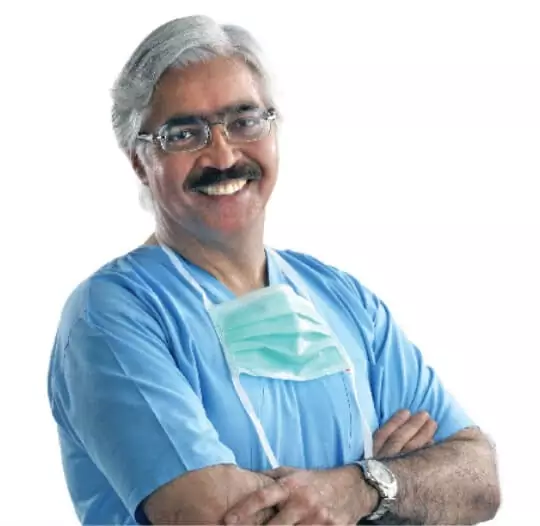
MBBS, MD, FRCP, MRCP
Fellowship, Cardiology U.S.A.
Recipient of Padma Shri & Padma Bhushan
Dr. Ashok Seth is one of India's most renowned and sought-after interventional cardiologists, and is regarded as one of the country's top 10 cardiologists. He has over 32 years of expertise and is known for doing over 50,000 angiograms and 20,000 angioplasties. For executing one of the biggest numbers of angiographies and angioplasties in the world, he was inducted into the “LIMCA" Book of Records.
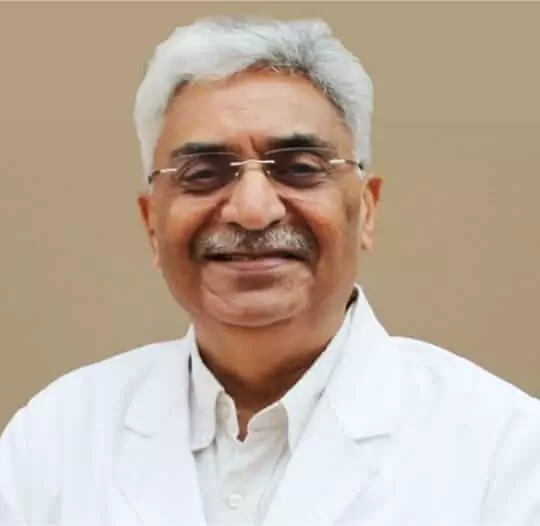
MBBS, MD, DM, MRCP
Recipient of Padma Bhushan & Lifetime Achievement Award
Dr. T.S. Kler is the Executive Director of Cardiac Sciences at Fortis Memorial Research Institute in Gurgaon, as well as the Head of the Cardiology Department. He was the first doctor in India to implant an implanted cardioverter defibrillator in April 1995. (ICD). He also built India's first electrophysiology department.
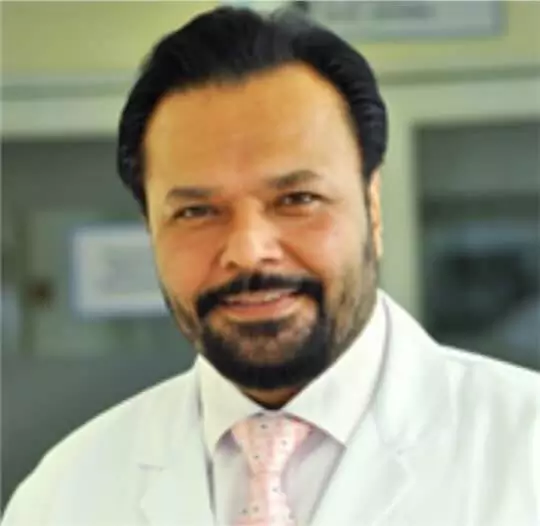
MBBS, MD, DM, DNB
Fellowship of the American College of Cardiology
He is an interventional cardiologist with an impressive 16 years of post-DM expertise and has conducted over 20,000 procedures. His work focuses on difficult coronary treatments such as Primary angioplasty (with thrombosuction devices, IABP, and other techniques), Bifurcation lesions, Chronic complete occlusions, and Left Main lesions. Cutting balloons, angiosculpt, IVUS, Rotablation, and other supplementary devices are among his specialties.
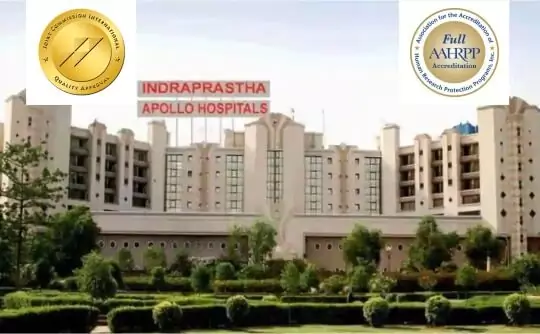
New Delhi
Indraprastha Apollo Hospitals, New Delhi is a state of the art multi speciality tertiary-care hospital situated in the most posh area of South Delhi. Considered to be the flagship hospital of Apollo group, Indraprastha Apollo Hospital is one of the important landmarks not only in Delhi, but in the world map because of its popularity among the medical tourists. The hospital has been one of the most sought after medical institutions for patients from Asia Pacific and beyond.
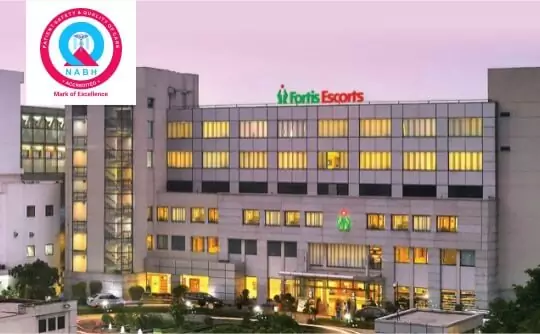
New Delhi
Fortis Escorts Heart Institute and Research Centre is one of the most revered medical institutions not only in India, but the entire world. The institute has set benchmarks in cardiac care with path-breaking work over the last 25 plus years. The hospital has the most advanced technology and has seen the best outcomes even in the most complex cardiac cases; be it cardiac surgery, Interventional Cardiology, Pediatric Cardiology, Pediatric Cardiac Surgery or Non-invasive Cardiology
In India, the average cost of heart bypass surgery starts at around USD 4000. The prices, however, may vary depending on various factors listed above.
A coronary artery bypass graft, like any other type of surgery, carries some risks of complications. An irregular heartbeat or a wound infection, for example, are normally minor and manageable, but there is a danger of significant complications, such as a stroke or heart attack, though rare with advancements in technique and technology.
Heart bypass surgery offers a promising prognosis that has improved over the last three decades. The survival rate for bypass patients who survive the first month after surgery is comparable to the general population.
Expect a six to twelve-week recuperation period. After four to six weeks, if your doctor gives you the green signal, you can return to work, start exercising, and resume sexual activity.
CABG can ease symptoms and perhaps prevent a heart attack by restoring blood flow to the heart. Every year, millions of coronary bypass surgeries are conducted across the world, with an overall success rate of over 98 percent.
The surgery is under general anesthesia and you will not feel any pain or discomfort during the surgery. For the time you are in the hospital, your doctor shall prescribe you pain medication to control the pain.
For the first few weeks after surgery, you will be fatigued and sore. On either side of your chest, you may experience some intense aches. It's possible that your chest, shoulders, and upper back hurt. It's possible that the incision in your chest, as well as the area where the healthy vein was removed, will be uncomfortable or swollen.
Yes, minimally invasive open-heart surgery is performed without opening the chest. You must check with your doctor if you are a candidate for minimally invasive bypass surgery though.
Open heart surgery is the technique to perform bypass surgery. Bypass surgery can be done by opening the chest wall or through a minimally invasive technique, without stopping the heart.
You will normally spend around 7-8 days in the hospital after heart bypass surgery in India, of which 1-2 days would be in the ICU.
The technique and technology have advanced phenomenally over the last few decades. Coronary artery bypass graft surgery is increasingly common in patients of age ≥80 years, and that too with great success.
In addition to the cost of surgery for Heart Bypass in India, there are several other expenses you should plan for when organizing your medical trip to India. These include:
These additional expenses over and above the Heart Bypass Surgery cost in India, will give you a a comprehensive budget to target that will ensure a smooth and hassle-free experience.
Enhance your medical journey to India by availing these extra services.

If you're looking for a wellness retreat, there are numerous options available. India, in particular, is renowned for its wellness retreats, attracting spiritual seekers from around the world. Immerse yourself in the realm of Health and Wellness with our curated selection of wellness retreat options.
Know More >>
If you are seeking treatment for chronic diseases, you have several options. Authentic Ayurveda is renowned for its holistic approach to healing and offers a variety of remedies. Select from a range of Authentic Ayurveda alternatives to address chronic ailments or consider a blend of Ayurveda and Allopathy for a comprehensive approach.
Know More >>
We invite you to discover India - a mystical land that is a tapestry of diverse cultures and experiences. A rich cultural heritage, a variety of religions, languages, customs, vibrant traditions, and diverse landscapes offer a plethora of experiences for travelers. This makes India a fascinating destination for those seeking to explore different cultures.
Know More >>Traveling abroad for medical reasons may be challenging. With our experience of over a decade and working with the best surgeons and top hospitals in India, we help make your medical tour easier and safer for you. We will guide you at every step of the way and make end-to-end arrangements for your surgery, travel, and stay.

Rohini Chand
I Rohini from Australia absolutely recommend IndiCure. Very professional and very prompt with our questions in regards to Visas,surgeons, hospitals, finances...
Read More

Ramandeep Dhaliwal
I had great experience having rhinoplasty through Indicure. Dr. Ruchika from Indicure has helped me in finding best plastic surgeon, answering all my questions...
Read More

Evalte Nazario
On the 8th Nove 2021 I had a MICS Mitral Valve Replacement using replacement.
Allhandullilah another battle had and I believe it has been successfully managed...
Read More

Joshua Archer
My name is Joshua Archer I'm from New Zealand, bay of plenty, kawerau I opted for the bypass surgery in January 2023 but planned it in advance for 28 September found IndiCure...
Read More

Priya Arora
IndiCure staff/team was very supportive all the way from airport pick-up to surgery and after surgery till day I had to fly back to Queensland. The surgeon was excellent...
Read More

Kera Ren
Absolutely loved my experience with IndiCure - from first inquiring to meeting the surgeon pre op to my follow up post op. The surgeon was extremely approachable...
Read More

Pauline Murti
Indicure have changed my life with top of the line, proffesional care and knowledge. I have had no complications. My type 2 diabetes have completely gone. I have no more protein...
Read More

Andreana Paul
Had a wonderful experience. Visited India for my plastic surgery. From sending mails, airport pickup, comfortable accommodation and, to smooth hospital appointment booking...
Read More

Audette Dillon
I recently traveled to Mumbai for a lower body lift and breast lift. As an American nurse living in Saudi Arabia I was apprehensive at first. I chose IndiCure because of Dr. Jagannathan...
Read More

Brandi Luce
I had the privilege of using Indicure's services for a cosmetic procedure that I had wanted for a long time but had always been apprehensive about. Ruchika helped me...
Read More

Hermenegildo Singano
I went to India for a heart treatment at the fortis hospital, they do an excellent job all the medical staff are very professional, I recommend people suffering from this...
Read More

Jade M
Indicure Health Tours went above and beyond my expectations. They helped me with every aspect of my journey and were professional, kind and caring. I was...
Read More
The content on the website (www.indicure.com) is intended to be general information and is provided only as a service. All photographs on our website of before and after results are examples only, and do not constitute an implied or any other kind of certainty for the result of surgery.
Learn about IndiCure Health Tours' comprehensive editorial policy that strives to deliver trustworthy, helpful, relevant, accurate and people-first content on medical tourism in India.
It is not medical advice and should not be taken as medical advice. It should not be used to diagnose or treat a health condition and is in no way meant to be a substitute for professional medical care. You are advised to see a surgeon in person to assess what surgery may or may not accomplish for you.
It is also important to keep your expectations realistic and to understand that all surgical procedures carry risks and should never be taken lightly.