


Leaving My Walker Behind: Roger's Bilateral Hip Replacement Journey in India

Editor's Note:
This article has been compiled by the IndiCure Editorial Team based on our team's direct interactions, interviews, and medical travel coordination with Roger Gee, a 57-year-old from Lower Hutt, New Zealand, who traveled to Mumbai, India, for his bilateral hip replacement surgery.
Disclaimer: Medical outcomes and recovery times depend on individual health conditions, surgical protocols, and rehabilitation. Results for each patient may vary.
Living with Constant Hip Pain
My name is Roger Gee, and I am 57 years old from Lower Hutt, New Zealand.
Living with pain in both hips wasn't just physically challenging—it affected nearly every part of my daily routine. Walking any meaningful distance became exhausting, climbing stairs was difficult, and my mobility continued to decline. As the discomfort worsened over time, I realized that conservative treatments were no longer enough and that bilateral hip replacement offered the best chance of regaining my independence.
Like many patients considering treatment abroad, I wanted an experienced surgeon, a trusted hospital, clear communication, and confidence that I would be supported before, during, and after surgery.
Why We Chose India and IndiCure
Our journey actually began with another patient's story. While researching treatment options, my wife and I came across the experience of Clair Olsen, a fellow New Zealander who had travelled to India with IndiCure for her orthopedic surgery. Reading about her journey encouraged us to explore the possibility of having my bilateral hip replacement in India with IndiCure.
As we continued our research, we reached out to IndiCure to better understand the process. Our questions about treatment, travel, and planning were answered clearly, which gave us the confidence to move forward with our decision.
Travelling overseas for surgery is a significant decision, but once we understood the process, we felt confident moving forward. Like many patients from New Zealand and other Western countries, we found that India offered several advantages for hip replacement surgery:
- No Waiting Times: Compared to healthcare systems in Western countries, waiting times were significantly shorter, allowing me to receive treatment without months of delay.
- International Standards at Lower Cost: The overall cost of bilateral hip replacement was considerably lower than in countries like New Zealand, Australia, the UK, and the US, while still providing access to modern hospitals, experienced orthopedic surgeons, and internationally recognized standards of care.
Once we decided on India, we wanted someone to help us navigate the process. That's where IndiCure made a real difference. From reviewing my medical reports and arranging medical visas to coordinating airport transfers, accommodation, hospital appointments, and follow-up visits, everything was organised smoothly. Having that support meant we could focus on my surgery and recovery rather than the logistics of travelling abroad.
My Robotic Bilateral Hip Replacement Surgery in Mumbai
One of the highlights of my journey was meeting Dr. Mudit Khanna. From our consultations onward, he explained my condition, discussed the treatment plan thoroughly, and made me feel comfortable about undergoing bilateral hip replacement surgery. His confidence, professionalism, and experience gave me complete trust before the operation.
After completing my pre-operative evaluations at Wockhardt Hospital, Mumbai, I underwent robotic-assisted bilateral hip replacement surgery. Dr. Mudit Khanna explained that the procedure would be performed using the MAKO robotic-assisted system through a minimally invasive approach.
Using advanced CT-based planning, real-time navigation, and haptic robotic technology, the system helps surgeons accurately position the implants while preserving as much healthy bone and surrounding soft tissue as possible. I was also told that, for suitable patients, this muscle-sparing approach may support earlier mobility, reduce post-operative discomfort, and shorten the hospital stay—an important consideration for someone travelling internationally for treatment.
The surgery went smoothly, and once it was over, my focus shifted to recovery. As each day passed, I noticed steady improvements in my mobility and confidence, bringing me closer to the active lifestyle I had been hoping to regain.

Saying Goodbye to My Walker
Recovery doesn't end when the surgery is over, and I quickly realized how important good post-operative care is. Throughout my hospital stay, the nursing staff and healthcare team were kind, attentive, and always willing to help whenever I needed assistance. Knowing I was well looked after gave me confidence to focus on healing and getting back on my feet.
One moment I'll never forget was leaving my walker behind at the hotel before returning home. It had been an important source of support before my surgery and during the early days of recovery, but by the end of my stay in India, I no longer needed it.
For me, leaving the walker behind wasn't just about walking without assistance—it symbolized a fresh start. After years of living with chronic hip pain, I was finally able to move with greater confidence and independence.
My Wife's Experience as My Companion
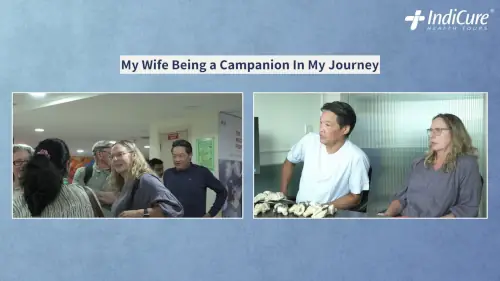
Travelling to another country for surgery was a big step, but I was grateful that my wife, Paulette Scott, was with me throughout the journey. Having someone familiar beside me during hospital visits, recovery, and rehabilitation made the experience much easier.
Like any family member, she had questions before we travelled and wanted to be sure we had planned everything properly. As the days went by and she saw my recovery, her concerns gradually turned into relief. Watching me regain my mobility and confidence after surgery was just as meaningful for her as it was for me.
Looking Back on Our Journey and My Message to Others
Looking back, what I value most is not just the success of the surgery itself, but the way the whole trip was organised for me, which let me get my mobility back, walk comfortably again, and enjoy everyday life with renewed confidence.
For anyone sitting where I was—dealing with chronic pain and weighing the uncertainties of traveling abroad for healthcare—my strongest advice is to look closely at what India has to offer. Combining modern medical infrastructure, like the advanced robotic systems we used, with exceptionally skilled specialists makes it a serious option to consider for complex orthopaedic care.
However, navigating a medical journey across borders requires the right partner to truly make it work. Having a dedicated team like IndiCure to handle the intricate logistics, from clinical coordination to personal comfort, is what takes a great deal of the worry out of a daunting medical trip. Taking the time to research your options and partnering with trusted professionals who prioritize your care at every step can become the true beginning of a healthier, more active life.

Frequently asked questions
What is MAKO robotic-assisted hip replacement, and how does it differ from the standard operation?
The surgeon still performs the operation. The robotic arm is a planning and positioning aid: a CT scan of your hip is used to build a plan, and the system helps the surgeon hold to that plan while preparing the bone and placing the implant. The published case for it rests mainly on more consistent implant positioning. Whether that translates into a longer-lasting hip for any individual patient is not settled, so treat it as one factor in choosing a surgeon and a hospital rather than the deciding one.
Can both hips be replaced on the same trip?
Sometimes, and Roger's were. Whether it is reasonable for you depends on your general health, your heart and lungs, your weight, how much blood loss the surgeon expects and how much rehabilitation you can manage with both sides healing at once. Doing both at one sitting means one anaesthetic and one recovery instead of two, but a longer operation and a harder early rehab. That judgement belongs to the surgeon and the anaesthetist after they have assessed you.
How much does a hip replacement in India cost?
Our hip replacement cost page gives a starting figure of USD 7,470 for one hip (USD 8,400 for robotic surgery), which covers the implant, the surgery, the hospital stay and the usual investigations. A bilateral case is quoted separately rather than simply doubled, because the hospital stay and theatre time are shared. Ask for an itemised written estimate before you travel, and ask what is excluded.
How long will I need to stay in India?
Your surgeon sets that, and this page deliberately does not give a number, because Roger's schedule was his own. Each hip replacement has its own review points, and a bilateral case usually needs longer than a single one. Do not book a fixed return flight until the surgeon has confirmed you are fit to fly, and leave some slack in case a review shows you need more time.
What are the risks of hip replacement?
The main ones are infection, blood clots in the leg or lung, dislocation of the new joint, a difference in leg length, nerve injury, fracture around the implant, and loosening or wear of the implant over the years. Long-haul flying adds its own clot risk, which is why surgeons give travel clearance rather than leaving it to you. Your surgeon should go through the ones that apply to your hip and your health before you agree to anything.
Medical Disclaimer: The patient story featured above represents an individual experience and is intended solely for informational and educational purposes. Because every individual's anatomy, health condition, and healing capacity are unique, clinical outcomes and recovery times can vary significantly from person to person. All surgical procedures, including robotic-assisted orthopedic surgeries, carry inherent clinical risks. This content does not constitute medical advice, diagnosis, or treatment. Decisions regarding any surgical intervention should always be made in direct consultation with a qualified, licensed healthcare professional.


