
Curated By:
Dr. Anjali Mishra, BDS
Medically Reviewed By:
Dr. Harish Pamnani, MBBS, DCH
Last updated: Nov 06, 2026
ENT care ranges from routine sinus and ear conditions to complex procedures such as cochlear implantation. IndiCure connects international patients with the right ENT specialist in India based on their clinical expertise, experience, qualifications, and hospital affiliations.
Every specialist featured on this page is evaluated against our 15-Point Surgeon Selection Criteria, with relevant credentials and professional information verified through available sources. IndiCure does not charge patients for doctor recommendations, and doctor or hospital placement is not based on financial incentives.

New Delhi
Experience: 25+ years
Hospital: Indraprastha Apollo Hospital
Speciality: Cochlear Implants, Auditory Brainstem Implants, Neuro-Otology & Paediatric ENT
Qualification: MBBS (AFMC), FRCS (Glasgow), FRCS (Edinburgh), FRCS (ORL-HNS, UK)
Fellowships & Training: National Centre for Cochlear Implantation (UK), Manchester Royal Infirmary (UK), University of Würzburg (Germany)

Mumbai
Experience: 50+ years
Hospital: Jaslok Hospital
Speciality: Cochlear Implants, Neuro-Otology & Endoscopic Sinus Surgery
Qualification: MBBS, MS (ENT), DORL, DSc (Hon.)

New Delhi
Experience: 26+ years
Hospital: Fortis Hospital, Vasant Kunj
Speciality: Cochlear Implants, Otology & Auditory Implant Surgery
Qualification: MS (Otolaryngology), DLO (RCS England), FRCS (ORL - RCSI Ireland), MD (Clinical Research - Cochlear Implants, UCL UK)
Fellowships & Training: Cochlear Implant Programme at Great Ormond Street Hospital & University College London (UK)

Mumbai
Experience: 30+ years
Hospital: Wockhardt Hospitals, Mumbai Central
Speciality: Otology, Cochlear Implants, Sinus & Salivary Gland Surgery
Qualification: MBBS, DLO (CPS Mumbai), MS (ENT) — University of Bombay
Fellowships & Training: Cochlear Implant Fellowship - Whipps Cross Hospital, UK; Salivary Endoscopy Fellowship - Royal Victorian Eye & Ear Hospital, Melbourne, Australia; Endoscopic Thyroidectomy Fellowship - Patel Chest Institute, Delhi.

Mumbai
Experience: 28+ years
Hospital: Gleneagles Hospital, Parel
Speciality: Cochlear Implants, Ear Microsurgery & Endoscopic Sinus Surgery
Qualification: MBBS, FCPS (ENT) — Seth G.S. Medical College & KEM Hospital, Mumbai
Fellowships & Training: Salivary Gland Endoscopy (Sialendoscopy) — University of Erlangen (Germany)

Mumbai
Experience: 25+ years
Hospital: Nanavati Max Super Speciality Hospital
Speciality: Cochlear Implants, Robotic Head & Neck Surgery
Qualification: MBBS, MS (ENT) — University of Pune
Fellowships & Training: Robotic Surgery at University of Pennsylvania (USA) and Severance Hospital (South Korea); European Sialendoscopy Center (Switzerland)

Gurugram, Delhi NCR
Experience: 22+ years
Hospital: Artemis Hospital
Speciality: Cochlear Implants, Paediatric Airway Reconstruction & Sleep Surgery
Qualification: MBBS (Madras University), MS (ENT - Lady Hardinge Medical College), ECFMG Certified (USA)

Faridabad, Delhi NCR
Experience: 20+ years
Hospital: Amrita Hospital
Speciality: Cochlear Implants, Paediatric Airway Surgery & Skull Base Surgery
Qualification: MBBS, MS (ENT), MRCS (ENT) — Royal College of Surgeons, London, UK
Fellowships & Training: Advanced ENT training and workshops, including training programmes in Cardiff, Wales

Navi Mumbai
Experience: 11+ years
Hospital: Apollo Hospitals, Navi Mumbai
Speciality: Cochlear Implants, Neuro-Otology & Endoscopic Skull Base Surgery
Qualification: MBBS, MS (ENT - Honours), DNB (ENT - Honours)
Fellowships & Training: International Visiting Scholar — Ohio State University Medical Center (USA)

Mumbai
Experience: 20+ years
Hospital: Fortis Hospital, Mulund
Speciality: Cochlear Implants, Otology & Paediatric ENT
Qualification: MBBS, MS (ENT), DNB
Fellowships & Training: Otology Training — Causse Clinique, France; Bochum University, Germany

New Delhi
Experience: 34+ years
Hospital: BLK-Max Super Speciality Hospital, New Delhi
Speciality: Cochlear Implants, Otology, Middle Ear Implants, Lateral Skull Base Surgery
Qualification: MBBS, MS (ENT), DNB (ENT)
Fellowships & Training: Otology Fellow, KKR ENT Research Institute, Chennai; Endoscopic Lateral Skull Base Surgery Fellow, Hôpital Nord, Marseille, France; Eli Aizer Sultan & Indian Society of Otology Fellow, Société d'Otologie Pratique, France
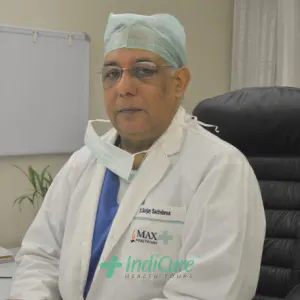
New Delhi
Experience: 40+ years
Hospital: Max Super Speciality Hospital, Saket
Speciality: Cochlear Implants & Endoscopic Skull Base Surgery
Qualification: MBBS, MS (ENT) — Maulana Azad Medical College, New Delhi
Fellowships & Training: Nucleus Cochlear Institution (Melbourne, Australia), University of Würzburg (Germany)
The cost of cochlear implantation varies considerably by the type of device or implant used, countries, and healthcare systems. In India, the total cost includes the implant or device, surgery, hospitalisation, audiological assessment, programming and rehabilitation. The implant brand and model, hospital, surgeon, type of implantation and rehabilitation requirements also affect the final cost.
For international patients considering treatment in India, indicative package prices start at US$13,000 for a single-ear cochlear implantation and US$6,000 for BAHA surgery, depending on the treatment plan and package inclusions. These figures are estimates and should not be interpreted as standard prices across India. A personalised quotation should be obtained after clinical assessment and confirmation of the implant system and services included.
A cochlear implant is an electronic hearing device that bypasses damaged parts of the inner ear and electrically stimulates the auditory nerve. An external microphone and sound processor capture and process sound, while an implanted component sends electrical signals through an electrode array. The brain then interprets these signals as sound.
Cochlear implants may be considered for eligible children and adults with severe to profound hearing loss who receive limited or no benefit from appropriately fitted hearing aids. Candidacy depends on factors such as hearing-test results, speech perception, medical and anatomical assessment, previous hearing-aid use and the individual's overall circumstances. The implant team determines suitability after a comprehensive evaluation.
A hearing aid primarily amplifies sound so that a person can make better use of their remaining natural hearing. A cochlear implant works differently: it bypasses damaged portions of the inner ear and provides electrical stimulation to the auditory nerve.
Cochlear implants are generally considered for people with severe to profound hearing loss who receive limited benefit from hearing aids, while hearing aids may be appropriate for many people with less severe or different types of hearing loss. The appropriate device depends on the individual's hearing assessment and clinical evaluation.
There is no single age that applies to every child. Eligibility depends on the child's degree and type of hearing loss, hearing-aid benefit, medical assessment, and the criteria applicable to the implant and healthcare system.
In the United States, the FDA has approved cochlear implants for eligible children from 9 months of age for certain indications. Early implantation may provide access to sound during an important period for speech and language development, but the appropriate timing should be determined by the child's cochlear implant team.
Outcomes vary considerably between individuals, so there is no single success rate that accurately predicts the result for every patient. Cochlear implants can provide useful hearing sensations and improve speech understanding for many recipients, but the degree of benefit varies.
Factors that can influence outcomes include age at implantation, duration and cause of hearing loss, hearing-aid experience, pre-existing speech and language development, and participation in post-implant rehabilitation. Children generally require substantial auditory and language training after implantation.
Cochlear implantation is a surgery and, like other surgical procedures, carries potential risks. These can include infection, dizziness, facial-nerve injury, cerebrospinal-fluid leakage and loss of residual hearing, although the likelihood varies between patients and devices.
A unilateral cochlear implant provides electrical hearing stimulation to one ear. A bilateral cochlear implant provides stimulation to both ears, either during the same operation or through separate procedures.
Bilateral implantation may provide advantages such as improved access to sound from different directions and better hearing in some noisy environments. However, candidacy for one or two implants depends on the individual's hearing loss, age, clinical assessment, device indications, and other factors. The decision should be made with the cochlear implant team rather than based on cost alone.
The external sound processor is generally fitted and activated after the surgical site has had time to heal, rather than immediately after surgery. The timing varies according to the patient and the treating centre.
After activation, an audiologist programs or maps the processor and makes adjustments over subsequent appointments. Patients may also require auditory rehabilitation, speech and language therapy or auditory-verbal therapy, particularly children who are learning to interpret sound and develop spoken language.
Progress varies. Some adults notice meaningful benefit relatively early, while children and people with longer-standing hearing loss may require more extensive rehabilitation and continued programming.
Yes. Cochlear implants are used in eligible adults as well as children. Adults with severe to profound hearing loss who receive limited benefit from hearing aids may be considered for implantation.
Adults with age-related hearing loss may therefore be candidates if they meet the relevant clinical criteria. Outcomes vary according to factors such as the duration and severity of hearing loss, previous hearing experience and rehabilitation. A cochlear implant assessment is needed to determine whether implantation is appropriate for an individual patient.
Medical Disclaimer
This information is for educational purposes only. IndiCure facilitates medical travel and does not provide medical advice, diagnosis, or treatment. Treatment suitability must be assessed by a qualified ENT specialist. Outcomes and risks vary by patient.
How this page is verified: ENT specialist qualifications, specialties, services, and affiliations are reviewed against IndiCure's 15-Point Surgeon Selection Criteria and publicly available hospital and specialist sources. Surgical volumes are reported by the surgeon or hospital and updated where available.
Privacy Note: Your medical information is handled confidentially and is used only for patient support and treatment coordination.
We handle every detail of your trip so you can focus entirely on your health and recovery:
The content provided on this website is intended for general educational purposes only and does not constitute professional medical advice, diagnosis, or treatment. While we maintain a comprehensive editorial policy to ensure the accuracy and reliability of our information, this content should not be utilized as a substitute for professional clinical care.
Individual Results: All "before and after" photographs are illustrative examples of potential outcomes; actual surgical results vary significantly by individual.
Mandatory Consultation: We strongly advise a personal, in-person evaluation with a qualified surgeon to assess your specific medical needs and realistic procedural goals.
Surgical Risk: It is vital to maintain realistic expectations and fully understand potential complications before electing for surgery.