
Curated By:
Dr. Chhaya Rakh
Medically Reviewed By:
Dr. Ruchika Malhotra, BOT, OTR (USA), MSW
Last updated: July 17, 2026
Gynecological care demands both high-level surgical precision and absolute clinical sensitivity. To protect your safety and comfort, IndiCure actively audits and hand-selects every partner gynecology hospital in India.
Using our strict 10-Point Selection Framework, we continuously evaluate each facility for:
The accredited facilities below have been verified by the IndiCure team to actively coordinate your care.

Mumbai
Established In: 1950
Beds: 350
Speciality: Multi-specialty Quaternary care
Accreditation: NABH, NABH-MIS (For Imaging & Radiology Excellence)

Mumbai
Established In: 2008
Beds: 450
Speciality: Quaternary care multi-specialty
Accreditation: JCI, NABH, NABL

Mumbai Central
Established In: 2014
Beds: 350+
Speciality: Multi-specialty tertiary care
Accreditation: JCI, NABH, NABL

Navi Mumbai
Established In: 2016
Beds: 500
Speciality: Multi-specialty Quaternary Care
Accreditation: JCI, NABH, NABL

Gurugram (Delhi-NCR)
Established In: 2007
Beds: 865
Speciality: Multi-specialty Quaternary Care Hospital
Accreditation: JCI, NABH, NABL, Green OT, Pharmacie De Qualité

Mulund, (Mumbai)
Established In: 2004
Beds: 400+
Speciality: Multi-Specialty Tertiary and Quaternary Care Hospital
Accreditation: JCI, NABH, NABL
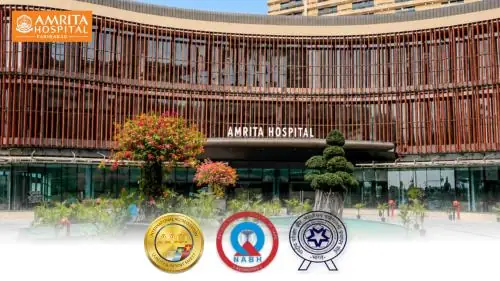
Faridabad, (Delhi NCR)
Established In: 2022
Beds: 2,600
Speciality: Multi-specialty Quaternary Care Hospital
Accreditation: AACI, NABH, NABL
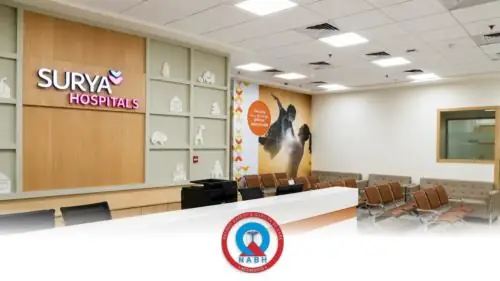
Mumbai
Established In: 1985
Beds: 200
Speciality: Women & Child care, IVF
Accreditation: NABH

Gurugram, Delhi NCR
Established In: 2009
Beds: 1,440
Speciality: Multi-specialty Quaternary Care
Accreditation: JCI, NABH, NABL
No, a robot does not perform your surgery. Your surgeon is in complete control of your surgery. Think of it as your surgeon using highly advanced, computerized tools. They sit at a nearby console, viewing a crystal-clear, magnified 3D image of your pelvis. When your surgeon moves their hands, the robotic arms mirror those movements with extreme precision inside tiny incisions. It allows for microscopic accuracy that the human hand cannot match alone.
Because robotic and advanced laparoscopic surgeries use tiny, "dime-sized" cuts rather than a large abdominal incision, your body heals much faster.
Please Note: The timelines provided are indicative guidelines only and will vary based on individual circumstances. A personal consultation with a qualified surgeon is necessary to establish an accurate timeline for your specific care.
When a patient has severe fibroids or endometriosis but wants to have children in the future, the main goal of using robotic surgery (like the Da Vinci system) is to protect the physical structure of the reproductive organs.
While no surgery can absolutely guarantee a future pregnancy, the design of robotic tools allows doctors to operate with a high level of precision that is different from traditional open surgery or standard keyhole surgery (laparoscopy).
Because fertility is complex, anyone planning to have a surgery to protect their reproductive health should undergo a thorough evaluation before the procedure, which often includes a baseline fertility check with a reproductive specialist.
Flying too soon after any pelvic surgery carries a risk of Deep Vein Thrombosis (DVT), which is when dangerous blood clots form in the deep veins of your legs. Sitting still for a long time in an airplane cabin, combined with low cabin humidity (dehydration), makes it easier for blood to pool and clot while your body is still healing from surgery.
These timelines are not a guarantee. If you have additional risk factors—such as a high body weight, a history of smoking, inherited blood disorders, or a cancer diagnosis—you will need a longer recovery window before it is safe to board a plane.
If your baby arrives prematurely or requires immediate medical attention, a Level III NICU (Neonatal Intensive Care Unit) is the highest standard of specialized intensive care available. It means the hospital has 24/7 neonatologists, advanced breathing support systems, and specialized incubators capable of caring for extremely fragile or micro-premature babies (even those born weighing less than 500 grams).
Vaginal Natural Orifice Transluminal Endoscopic Surgery (vNOTES) is an advanced, minimally invasive gynecological technique that combines the direct visualization of laparoscopy with a transvaginal approach. During the procedure, specialized endoscopic instruments and a high-definition camera are guided into the pelvic cavity through a small incision made in the vaginal wall (colpotomy).
Because the surgical access point utilizes a natural orifice, transabdominal skin incisions are not required.
As with all minimally invasive platforms, an intraoperative risk of conversion to traditional multi-port laparoscopy or open laparotomy exists if anatomical anomalies or complications arise.
In many cases, yes. Early-stage cervical, uterine, and ovarian cancers are increasingly treated using minimally invasive robotic surgery. Surgeons use Sentinel Lymph Node Mapping to pinpoint precisely which lymph nodes need to be checked, avoiding unnecessary tissue removal. For advanced cancers, treatments like HIPEC (delivering heated chemotherapy directly into the abdomen during surgery) are used to target cancer cells locally, maximizing treatment success while minimizing damage to the rest of your body.
While you can absolutely travel alone, we recommend bringing a companion for emotional support.
If you choose to travel by yourself, please rest assured that you are in expert hands: we arrange everything for you, including airport pick-ups, a private nurse during your hospital stay, your hotel bookings, and a private car with a dedicated driver.
Furthermore, our dedicated on-the-ground team will visit you regularly to check on your recovery and ensure you are comfortable. However, because emotional comfort is such a vital part of healing, we still welcome and encourage you to bring a loved one along with you.
Most women requiring surgery for fibroids, ovarian cysts, pelvic organ prolapse, or heavy abnormal bleeding are excellent candidates. However, certain factors like extensive scar tissue from multiple past open surgeries, extreme obesity, or severe heart and lung conditions might make standard methods safer. Your surgeon will conduct a comprehensive pre-operative evaluation to determine the safest, most effective approach for you.
Your care and recovery support continue long after you board your flight home. Before your departure, you will receive a comprehensive medical dossier containing your complete surgical reports, anesthesia records, and a customized post-operative recovery plan.
To ensure your safety and peace of mind, we actively coordinate:
Medical Disclaimer
The information on this page, including hospital profiles, technologies, and treatment approaches, is provided for educational and care-planning purposes only. IndiCure is a medical travel facilitator and does not provide medical advice, diagnosis, or treatment. All treatment plans, surgical recommendations, and patient suitability are determined solely by independent, qualified gynaecologists and specialists at their respective licensed institutions. Individual outcomes vary, and the suitability of any procedure must be confirmed by a qualified specialist before making any treatment or travel decisions.
Note: Hospital details, accreditations, and services are reviewed annually by the IndiCure Quality Team and verified via official sources. Information is current as of the page's last updated date; users must independently verify the current status.
Sources:
Privacy Note: Your medical information is handled confidentially and is used only for patient support and treatment coordination.
We handle every detail of your trip so you can focus entirely on your health and recovery:
The content provided on this website is intended for general educational purposes only and does not constitute professional medical advice, diagnosis, or treatment. While we maintain a comprehensive editorial policy to ensure the accuracy and reliability of our information, this content should not be utilized as a substitute for professional clinical care.
Individual Results: All "before and after" photographs are illustrative examples of potential outcomes; actual surgical results vary significantly by individual.
Mandatory Consultation: We strongly advise a personal, in-person evaluation with a board-certified surgeon to assess your specific medical needs and realistic procedural goals.
Surgical Risk: It is vital to maintain realistic expectations and fully understand potential complications before electing for surgery.