
Curated By:
Dr. Prerana Patil- BPT
Medically Reviewed By:
Dr Harish Pamnani, MBBS, DCH
Last updated: Nov 06, 2026
Spine surgery ranges from keyhole disc surgery to complex scoliosis correction, and the right surgeon depends on your diagnosis. The surgeons below specialise in spine surgery. Some trained in orthopaedics and others in neurosurgery, and all treat disc problems, spinal stenosis, deformity, fractures and spinal tumours.
Each surgeon has been assessed against our 15-Point Surgeon Selection Criteria, with links to official profiles so you can verify their credentials. We don't charge patients for recommendations, and no doctor or hospital is featured in exchange for a financial arrangement. The specialists below are listed in no particular order. This list is not a ranking.
Looking for brain surgery? See our top neurosurgeons in India page.

Mumbai
Experience: 15+ years
Hospital: Wockhardt Hospitals, Mumbai
Speciality: Complex, Minimally Invasive & Robot-Assisted Spine Surgery, Craniovertebral Junction Surgery
Qualification: MBBS, MCh (Neurosurgery)
Fellowships and Training: Complex & Minimally Invasive Spine Surgery, Rush University, Chicago, USA; Skull Base Surgery & Neuro-Oncology - Toronto Western Hospital; Cerebrovascular & Bypass Surgery, Huashan Hospital, Fudan University, Shanghai, China
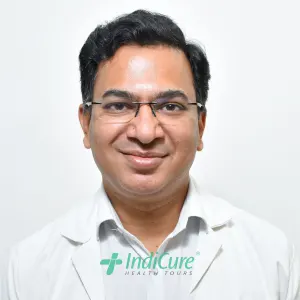
Gurugram
Experience: 15+ years
Hospital: Artemis Hospital, Gurugram
Speciality: Spine & Scoliosis Surgery, Paediatric Spine Surgery, Spinal Deformity Correction
Qualification: MBBS (AIIMS); MS (Orthopaedics)
Fellowships and Training: Adult Spine Surgery - Yale University, USA, Paediatric Spine Surgery - Shriners Hospitals for Children, Philadelphia, USA

Mumbai
Experience: 25+ years
Hospital: Nanavati Max Super Speciality Hospital, Mumbai
Speciality: Minimally Invasive Spine Surgery, Spinal Deformity Correction, Spinal Tumours
Qualification: MBBS, MS (Orthopaedics), DNB (Orthopaedic Surgery)
Fellowships and Training: Spine Surgery Fellowship, Queen's Medical Centre, Nottingham, UK; Global Outreach Fellowship, Scoliosis Research Society (SRS)

Gurugram
Experience: 20+ years
Hospital: Artemis Hospital, Gurugram
Speciality: Minimally Invasive & Endoscopic Spine Surgery, Craniovertebral Junction Surgery, Spinal Deformity
Qualification: MBBS; MS (Surgery); MCh (Neurosurgery)
Fellowships and Training: Cleveland Clinic Spine Institute, USA; Royal National Orthopaedic Hospital, UK; National Hospital for Neurology & Neurosurgery, UK; Spine Surgery Fellowship, KEM Hospital & Lilavati Hospital, Mumbai, India

Gurugram
Experience: 28+ years
Hospital: Medanta - The Medicity, Gurugram
Speciality: Orthopaedic Spine Surgery — Spinal Deformity, Spinal Tumours
Qualification: MBBS, MS (Orthopaedics), DNB (Orthopaedics)
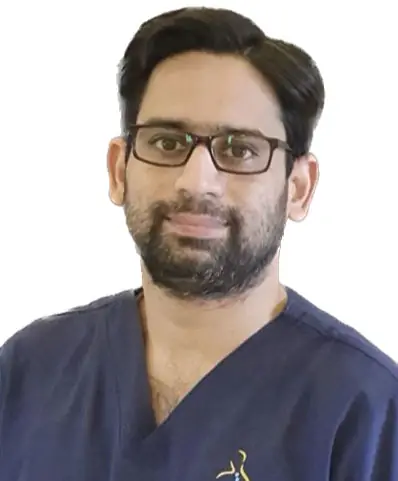
Navi Mumbai
Experience: 12+ years
Hospital: Apollo Hospitals, Navi Mumbai
Speciality: Minimally Invasive Spine Surgery, Spinal Deformity
Qualification: MBBS, MS (Orthopaedics), FNB (Spine Surgery)
Fellowships and Training: AO Spine Fellowship, Kolkata, India; National Board Fellow in Spine Surgery, Hinduja Hospital, Mumbai; IASA Fellowship, University Hospital Wales, Cardiff, UK; ASSI Travelling Fellowship; AOSpine International Fellowship
Clinical Experience: Over 12 years of experience, with previous consultant and associate roles at Joy Hospital, Mumbai, and Hinduja Healthcare Surgical/Wockhardt Hospitals, Mumbai Central, before joining Apollo Hospitals.

New Delhi
Experience: 25+ years
Hospital: BLK-Max Super Speciality Hospital
Speciality: Minimally Invasive & Robotic Spine Surgery, Spinal Deformity, Spine Trauma
Qualification: MBBS - Punjab University, Chandigarh; MS (Orthopaedics) - Baba Farid University of Health Sciences; MCh (Orthopaedics)
Fellowships and Training: Spine Fellowship, University Hospital of Wales, Cardiff, UK; Clinical & Bioskills Training in MITLIF - Singapore General Hospital, Singapore; Articular Surface Arthroplasty Fellowship - Knappschafts Krankenhaus, Puttlingen, Germany; AO Trauma Fellowship - Denver Health, Colorado, USA

New Delhi
Experience: 25+ years
Hospital: Max Super Speciality Hospital, Saket, New Delhi
Speciality: Complex & Revision Spine Surgery, Spinal Deformity, Robotic Spine Surgery
Qualification: MBBS, MS (Orthopaedics), MRCS
Fellowships and Training: Spine Fellowship - Dartmouth Spine Center, Dartmouth-Hitchcock Medical Center, USA; Spine Fellowship - Scoliosis Research Society (SRS) Global Outreach, Milwaukee, USA; Orthopaedics Fellowship - American College of Surgeons (FACS), Chicago, USA; Biodesign Fellowship - Stanford-India Biodesign Program, Stanford University, USA

New Delhi
Experience: 25+ years
Hospital: Fortis Hospital, Shalimar Bagh, New Delhi
Speciality: Minimally Invasive Spine Surgery, Spinal Stabilisation, Spinal Tumours
Qualification: MBBS, MCh (Neurosurgery)

Mumbai
Experience: 20+ years of overall practice
Hospital: Kokilaben Dhirubhai Ambani Hospital (KDAH), Mumbai
Speciality: Minimally Invasive & Endoscopic Spine Surgery, Cervical Spine Surgery, Craniovertebral Junction Surgery
Qualification: MBBS, MS (General Surgery), DNB (General Surgery), FRCS (General Surgery), FRCS (Neurosurgery)
Fellowships and Training: Minimally Invasive Spine Surgery, United Kingdom; Stereotactic Radiosurgery, United Kingdom

Mumbai
Experience: 14 years
Hospital: Gleneagles Hospital, Parel, Mumbai
Speciality: Spine Surgery
Qualification: MBBS; DNB (Orthopaedics)
Spine surgery in India is performed at JCI/NABH accredited hospitals by experienced surgeons. Many of these hospitals have dedicated spinal ICUs, neuromonitoring, and navigation equipment.
But like any spine operation, it carries risks. These can include infection, bleeding, nerve injury, a tear in the spinal fluid lining, blood clots, failure of bones to fuse, and persistent pain even after surgery. Your risk depends on your diagnosis, the procedure, and your overall health. Before you decide, the surgical team should review your MRI, X-rays and reports and explain the benefits and risks that apply to you.
Not always. Many back and neck problems, including many disc herniations, improve with physiotherapy, medication, injections or time. Surgery is usually considered when these treatments haven't helped, when pain severely limits daily life, or when there are signs of nerve or spinal cord damage, such as weakness, numbness or problems with bladder or bowel control. A specialist review of your scans can help you decide whether surgery is likely to help.
| Procedure | Starting price (US$) |
|---|---|
| Microdiscectomy | 3,500 |
| Minimally invasive spinal fusion | 5,500 |
| Single-level spinal fusion | 4,500 |
| Artificial disc replacement | 7,500 |
| Spinal tumour surgery | 8,500 |
| Scoliosis correction | 9,000 |
Prices as of September 2026. Starting prices only, not final bills.
The cost typically includes surgeon's fees, pre-op investigations, stay at the hospital for a specified number of days, medicines, and consumables at the hospital, and airport transfers.
The final cost depends on the procedure, the number of spinal levels treated, the implants used, the hospital, and your recovery. See our spine surgery cost in India page for a detailed breakdown, and ask for a written, itemised estimate after your reports have been reviewed.
Decompression surgery, such as microdiscectomy or laminectomy, removes tissue pressing on a nerve or the spinal cord without changing spinal alignment. Spinal fusion joins two or more vertebrae with bone graft and implants, and is usually used when there is instability or deformity. Artificial disc replacement swaps a damaged disc for a mobile implant, preserving movement at that level, but it suits only selected patients. Your surgeon will recommend an approach after reviewing your imaging.
Open surgery uses a larger incision to give the surgeon direct access to the spine. It's still needed for complex deformity correction, large tumours, and many multi-level fusions. Keyhole (minimally invasive or endoscopic) surgery works through small incisions, using a tube or camera, with less disruption to muscle. It often allows a shorter hospital stay and faster early recovery. Not every condition is suitable for a keyhole approach.
Yes. Many surgeons on this list perform minimally invasive procedures, including endoscopic discectomy, tubular microdiscectomy, and minimally invasive fusion. Whether it's suitable for you depends on your diagnosis and the spinal levels involved, and is confirmed after the surgical team reviews your imaging.
Robotic and navigation systems help surgeons plan and place spinal screws with high accuracy, which may be useful in complex cases or unusual anatomy. For many straightforward procedures, an experienced surgeon achieves similar results without robotics. Robotic surgery may also cost more. Ask your surgeon whether it offers a real benefit in your case.
Most patients spend 5 to 7 days in hospital after spinal fusion, followed by 1 to 2 weeks of recovery in India before flying home, depending on the surgeon's assessment. Bone fully fuses over 6 to 12 months, though most patients return to light activity within 4 to 6 weeks and are guided through a structured rehabilitation programme during that period.
It depends on the procedure. Keyhole disc surgery may need a stay of about 8 to 10 days, spinal fusion about 2 to 3 weeks, and complex deformity surgery longer. Your surgeon will confirm when it's safe to fly.
Yes. IndiCure arranges a video or telephone consultation with your surgeon before you travel. Send us your MRI, X-rays, CT scans, and any previous surgical reports, and the surgeon will review them before the call and discuss a preliminary treatment plan. A video consultation can't replace an in-person examination, so your plan will be confirmed after you're assessed in India.
If your imaging has been reviewed in advance and pre-operative tests are completed promptly, surgery can often take place within 1 to 2 days of arrival. Timing depends on the surgeon's schedule and the complexity of your case. IndiCure arranges your first in-person consultation as soon as possible after you land.
Bring all prior spine imaging (MRI, X-rays, and CT scans with the actual image files where possible, not just written reports), a summary of any previous spine surgery, a list of current medications, and a summary of symptoms and their progression, including which activities worsen or relieve them. Having these available for the video consultation, rather than waiting until arrival, allows the surgical team to give a more accurate initial assessment and reduces the chance of needing to repeat scans.
Medical Disclaimer
This information is for educational purposes only. IndiCure facilitates medical travel and does not provide medical advice, diagnosis, or treatment. Treatment suitability must be assessed by a qualified spine surgeon or neurosurgeon. Surgical outcomes, recovery times, risks, and complications vary by patient and depend on the diagnosis, spinal condition, procedure, and overall health.
How this page is verified: Spine surgeon qualifications, specialties, surgical expertise, hospital affiliations, and professional credentials are reviewed against IndiCure's 15-Point Surgeon Selection Criteria and publicly available hospital and specialist sources. Surgical volumes, experience, awards, and other professional details are reported by the surgeon, hospital, or other cited sources and updated where reliable information is available.
Privacy Note: Your medical information is handled confidentially and is used only for patient support and treatment coordination.
We handle every detail of your trip so you can focus entirely on your health and recovery:
The content provided on this website is intended for general educational purposes only and does not constitute professional medical advice, diagnosis, or treatment. While we maintain a comprehensive editorial policy to ensure the accuracy and reliability of our information, this content should not be utilized as a substitute for professional clinical care.
Individual Results: All "before and after" photographs are illustrative examples of potential outcomes; actual surgical results vary significantly by individual.
Mandatory Consultation: We strongly advise a personal, in-person evaluation with a qualified surgeon to assess your specific medical needs and realistic procedural goals.
Surgical Risk: It is vital to maintain realistic expectations and fully understand potential complications before electing for surgery.