Curated By:
Dr. Anjali Mishra, BDS
Medically Reviewed By:
Dr. Harish Pamnani, MBBS, DCH
Last updated: Nov 19, 2026
Looking for the best surgical oncologist in India? This page features experienced cancer surgeons practising at major hospitals in Mumbai, Navi Mumbai, Delhi-NCR and Chennai. They operate on cancers of the breast, head and neck, lung and oesophagus, digestive system, liver and pancreas, and urinary and reproductive organs, using open, laparoscopic and robotic surgery. Explore their qualifications, clinical experience and hospital affiliations, and check their official profiles to make an informed decision about cancer surgery in India with IndiCure Health Tours.
The right cancer surgeon depends on the type, stage, and location of the cancer, the operation needed, and the surgeon's experience with that particular cancer. IndiCure evaluates the surgical oncologists featured on this page against its 15-Point Surgeon Selection Criteria, which covers qualifications, surgical experience, subspecialty training, and hospital accreditation. Links to official hospital profiles are provided so you can verify their credentials. We don't charge patients for recommendations, and no doctor or hospital is featured in exchange for a financial arrangement.
The surgical oncologists below are listed in no particular order. This is a list, not a ranking.
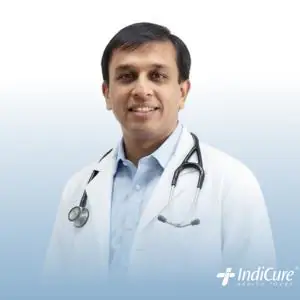
Mumbai
Experience: 25+ years
Hospital: Gleneagles Hospital, Parel
Speciality: Surgical Oncology, GI and HPB Oncology, Robotic Surgery
Qualification: MBBS, MS (General Surgery), MD; Honorary FRCS (England and Edinburgh), Honorary FACS
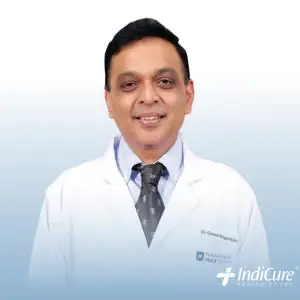
Mumbai
Experience: 22+ years
Hospital: Nanavati Max Super Speciality Hospital
Speciality: Surgical Oncology (GI and HPB)
Qualification: MBBS, MS (General Surgery), FCPS
Fellowships and Training: Surgical oncology training at Tata Memorial Hospital, Mumbai; fellowship in HPB surgery and liver transplantation, Hôpital Beaujon, Paris
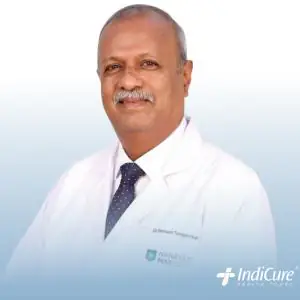
Mumbai
Experience: 35+ years
Hospital: Nanavati Max Super Speciality Hospital
Speciality: Surgical Oncology (Urological and Gynaecological Cancers)
Qualification: MBBS, MS (General Surgery), University of Mumbai
Fellowships and Training: Residency in Surgical Oncology and three-year Fellowship in Urologic and Gynaecologic Oncology, Tata Memorial Hospital, Mumbai
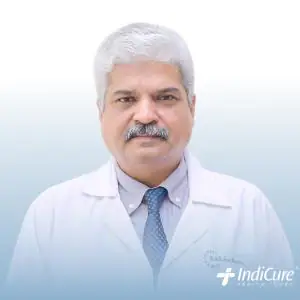
Mumbai
Experience: 35+ years
Hospital: Kokilaben Dhirubhai Ambani Hospital
Speciality: Surgical Oncology (Thoracic, Oesophageal, and Head and Neck)
Qualification: MBBS, MS (Seth G.S. Medical College and KEM Hospital, Mumbai)
Fellowships and Training: Surgical oncology training at Tata Memorial Hospital, Mumbai; fellowship in oesophageal surgery, Toranomon Hospital, Tokyo, Japan
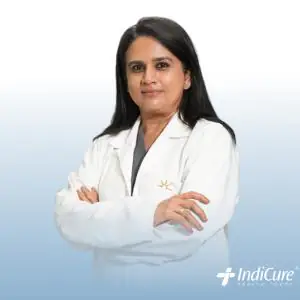
Mumbai
Experience: 16+ years
Hospital: HCG Cancer Centre, Borivali
Speciality: Surgical Oncology (Breast, and Head and Neck)
Qualification: MBBS, MS (General Surgery), Grant Medical College and Sir J.J. Group of Hospitals, Mumbai
Fellowships and Training: Fellowship in Breast Cancer Surgery, Tata Memorial Hospital, Mumbai
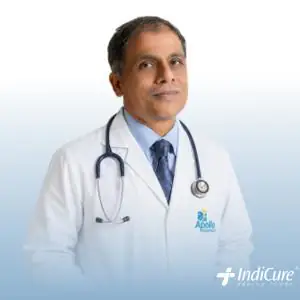
Navi Mumbai
Experience: 35+ years
Hospital: Apollo Hospitals, CBD Belapur
Speciality: Surgical Oncology (Head and Neck)
Qualification: MBBS, MS, DNB (General Surgery), FRCS
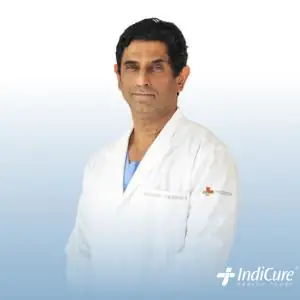
Gurugram
Experience: 40+ years
Hospital: Medanta - The Medicity
Speciality: GI and HPB Onco-Surgery
Qualification: MBBS, MS (General Surgery), FRCS (Edinburgh)
Fellowships and Training: WHO Fellowship, Department of Liver Transplantation, UCLA, USA
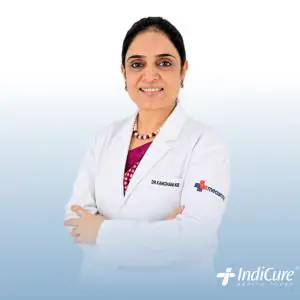
Gurugram
Experience: 20+ years
Hospital: Medanta - The Medicity
Speciality: Breast Surgical Oncology (Oncoplastic Breast Surgery)
Qualification: MBBS, MS (General Surgery), MRCS (Edinburgh)
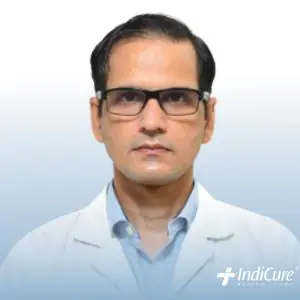
Gurugram
Experience: 20+ years
Hospital: Artemis Hospital
Speciality: Surgical Oncology and Thoracic Surgery
Qualification: MBBS, MS (General Surgery), FAIS, FAIGES, FACS
Fellowships and Training: Surgical oncology training at AIIMS, New Delhi; Fellowship in Thoracic Surgery, Tata Memorial Hospital; da Vinci robotic surgery certification
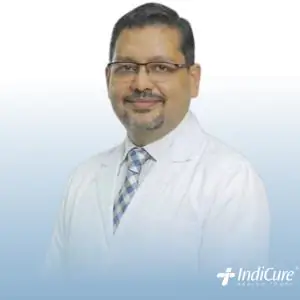
Gurugram
Experience: 25+ years
Hospital: Fortis Memorial Research Institute
Speciality: Surgical Oncology and Robotic Surgery
Qualification: MBBS, MS, DNB, MRCS (Edinburgh), MNAMS, FIAGES
Fellowships and Training: Surgical oncology training at Tata Memorial Hospital, Mumbai, and National Cancer Centre, Singapore

New Delhi
Experience: 40+ years
Hospital: Apollo Athenaa Women's Cancer Centre
Speciality: Surgical Oncology (Breast)
Qualification: MBBS, MS (General Surgery, AIIMS, New Delhi), FRCS (Edinburgh)
Fellowships and Training: Surgical Oncology Fellowship, Memorial Sloan Kettering Cancer Center, New York

Chennai
Experience: 20+ years
Hospital: Apollo Proton Cancer Centre
Speciality: Surgical Oncology (GI and Gynaecological)
Qualification: MBBS, MS (General Surgery), MCh (Surgical Oncology)
Fellowships and Training: PIPAC training (ISSPP); robotic surgery training on the da Vinci Xi
See Top Medical Oncologists in India →
See Top Cancer Specialists in India →
A surgical oncologist is a surgeon who specialises in operating on cancer. Unlike a general surgeon, a surgical oncologist is trained to remove a tumour together with a margin of healthy tissue and the nearby lymph nodes, which lowers the chance of the cancer coming back.
A surgical oncologist's role usually includes:
You are likely to need a surgical oncologist if:
The surgical oncologists on this page operate on cancers such as:
Common cancer surgeries include:
There is no single best surgical oncologist for every patient. The right cancer surgeon depends on the type, stage and location of your cancer, the operation you need, and the surgeon's experience with that particular cancer. The surgical oncologists on this page practise at major hospitals in Mumbai, Navi Mumbai, Delhi-NCR and Chennai, and their official profiles are linked so you can check their credentials.
A surgical oncologist has additional training in cancer surgery after general surgery, usually an MCh or DNB in surgical oncology, or fellowship training at a cancer centre. They are trained to remove the tumour with a margin of healthy tissue and the right lymph nodes, and to plan surgery alongside chemotherapy and radiation.
Yes. Many large hospitals in India offer robotic surgery for selected cancers of the prostate, kidney, bladder, uterus, cervix, bowel, oesophagus, lung, and head and neck. Robotic surgery can mean smaller incisions, less blood loss and faster recovery, but it is not suitable for every tumour. Your surgeon will advise whether it suits you.
Whipple surgery (pancreaticoduodenectomy) removes the head of the pancreas, part of the small intestine, the gallbladder and the end of the bile duct. It is used for cancers of the pancreas head, bile duct, ampulla and duodenum. It is a complex operation, best done by surgeons and hospitals that perform it often, and several surgeons on this page specialise in it.
HIPEC (hyperthermic intraperitoneal chemotherapy) is heated chemotherapy washed through the abdomen during surgery, after all visible cancer has been removed (cytoreductive surgery). It is used for selected patients whose cancer has spread to the lining of the abdomen, for example from the ovary, bowel or appendix. Suitability depends on how far the cancer has spread and the patient's overall health.
In many cases, yes. Breast-conserving surgery removes the tumour with a margin of healthy tissue and keeps the rest of the breast. It is usually followed by radiation therapy. Oncoplastic techniques reshape the breast after the tumour is removed. Whether it is possible depends on the size and position of the tumour and the size of the breast.
Often, yes. Chemotherapy or radiation may be given before surgery to shrink the tumour (neoadjuvant therapy), or after surgery to lower the risk of the cancer coming back (adjuvant therapy). The tumour board decides the order based on the type and stage of your cancer.
It depends on the operation. Breast cancer surgery may need a stay of about one to two weeks in India. Major operations such as Whipple surgery, oesophagectomy or HIPEC need a longer hospital stay followed by recovery before you fly home. Your surgeon will estimate the length of stay after reviewing your reports.
Your surgeon will decide when you are fit to fly, based on your wound healing, recovery and the type of operation. Patients usually stay in India until stitches or drains are removed and the pathology report has been reviewed, so that the next step of treatment can be planned.
Like any major operation, cancer surgery carries risks such as bleeding, infection, blood clots, leaks where organs are rejoined, and reactions to anaesthesia. The risk depends on the operation, the patient's overall health and the experience of the surgical team. Your surgeon will explain the specific risks of your operation before you consent.
Send your biopsy and histopathology report, any immunohistochemistry (IHC) results, recent CT, MRI or PET-CT scans with their reports (ideally the scan images on a CD or online link), endoscopy reports if relevant, recent blood tests, and a summary of any treatment already received.
Yes. Share your reports with IndiCure, and we can arrange a written opinion or a video consultation with one of the surgical oncologists on this page, subject to their availability. Many patients use this to learn whether their tumour can be removed, or whether a less invasive or organ-preserving operation is possible.
Yes. Patients can bring up to two attendants, who apply for a Medical Attendant visa linked to the patient's medical visa. IndiCure can help with visa invitation letters, airport pick-up and stay arrangements near the hospital.
The cost depends on the type of cancer, the operation, whether it is open, laparoscopic or robotic, the hospital, and the length of stay. Send your reports to IndiCure for a free, personalised quote.
This page was curated by Dr. Anjali Mishra, BDS, and medically reviewed by Dr. Harish Pamnani, MBBS, DCH.
This information is for educational purposes only. IndiCure facilitates medical travel and does not provide medical advice, diagnosis, or treatment. Cancer surgery must be planned by a qualified surgical oncologist after a full assessment. Eligibility, treatment options, risks and outcomes vary from patient to patient.
Each surgical oncologist's qualifications, experience and hospital affiliation are reviewed against IndiCure's 15-Point Surgeon Selection Criteria, using official hospital profiles and the National Medical Commission register where applicable. Surgical volumes, awards and other professional achievements are presented as reported by the surgeon or hospital.
Credentials were last verified in November 2026.
Privacy Note: Your medical information is handled confidentially and is used only for patient support and treatment coordination.
We handle every detail of your trip so you can focus entirely on your health and recovery:
The content provided on this website is intended for general educational purposes only and does not constitute professional medical advice, diagnosis, or treatment. While we maintain a comprehensive editorial policy to ensure the accuracy and reliability of our information, this content should not be utilized as a substitute for professional clinical care.
Individual Results: All "before and after" photographs are illustrative examples of potential outcomes; actual surgical results vary significantly by individual.
Mandatory Consultation: We strongly advise a personal, in-person evaluation with a qualified surgeon to assess your specific medical needs and realistic procedural goals.
Surgical Risk: It is vital to maintain realistic expectations and fully understand potential complications before electing for surgery.