


What Type of Cancer Can Be Treated with Proton Therapy? Key Insights for Patients
Introduction
Dealing with serious illnesses like cancer can be overwhelming, both for patients and their families. The diagnosis often comes with a whirlwind of emotions—fear, uncertainty, and anxiety. The emotional and physical toll of the disease is compounded by the financial burden, leaving patients and their families in a state of constant stress.
Patients not only face significant challenges in managing the disease itself, but also the side effects of treatment, including fatigue, nausea, pain, and changes in physical appearance, which can lead to feelings of isolation or a loss of self-esteem. The disruption to daily routines and regular lifestyles, adds another layer of difficulty. Additionally, the uncertainty about treatment outcomes can exacerbate anxiety and depression.
Advanced cancer treatments like proton therapy can be a beacon of hope in such a scenario. A cutting-edge form of radiation treatment that offers reduced side effects and higher precision, proton therapy can be a source of hope and empowerment for many patients, allowing them to focus on recovery with fewer disruptions to their daily lives. However, navigating a complex and emotionally draining cancer journey requires resilience, support, and access to resources. It is thus vital to understand the nitty-gritty of the treatment well to make well-informed decisions.
Overview of Proton Therapy
Proton therapy, also known as Proton Beam Therapy, is a highly advanced radiation therapy that utilizes high-energy protons to treat cancer and certain noncancerous tumors. While traditional radiation therapy with X-rays has been used for many years to address these conditions, proton therapy represents a newer approach, harnessing the energy of positively charged particles or protons for treatment.
Though not every patient is a candidate for Proton Beam therapy and what type of cancer can be treated with proton therapy needs careful deliberation, a large number of complicated cancers can be treated with this new-age treatment technique. Also, what gives Proton Therapy an edge over other cancer treatments is that the proton beams can be precisely targeted to the tissue being treated, reducing damage to surrounding healthy tissue. This precision makes proton therapy a strong option for treating cancers located near critical areas such as the brain, heart, or spinal cord. It is also commonly used for treating childhood cancers.
Advantages of Proton Therapy
Proton therapy is non-invasive and highly precise, and the treatment itself is not painful. Side effects are usually fewer than with conventional radiotherapy, but they do occur. It works by targeting the genetic material of cancer cells, effectively destroying them and preventing their ability to multiply. Here are some of the key advantages of Proton therapy -
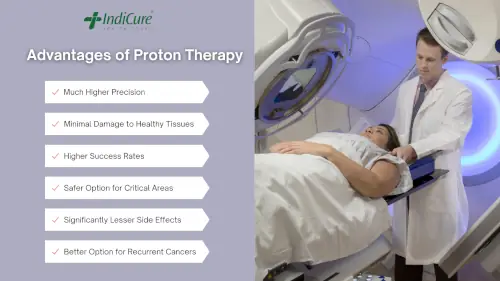
- Much Higher Precision: The biggest advantage of proton beams is their precision, enabling higher energy to be directed at cancer cells while minimizing damage to nearby healthy tissue and vital organs. This precision may lead to more effective treatment and fewer side effects.
- Minimal Damage to Healthy Tissues: Proton therapy can considerably reduce radiation exposure to healthy surrounding tissues. This reduction in radiation helps minimize damage to critical areas near tumors and lowers the risk of long-term complications from radiation.
- Treatment Option for Critical Areas: The precision of proton therapy makes it a strong option for treating tumors located near vital organs and radiation-sensitive tissues.
- Fewer Side Effects: Side effects occur when healthy tissue is exposed to radiation. Reduced exposure in the case of proton beam therapy can result in fewer side effects.
- Better Treatment Option for Recurrent Cancers: For recurrent cancer cases, proton therapy can be a good option since it exposes nearby healthy tissue to less radiation, which can make re-treatment possible in selected cases.
- Tightly Targeted Dose: Because the dose can be concentrated more tightly on the tumour, proton therapy allows a high dose to be delivered while sparing more of the surrounding tissue. Published results for tumour control are broadly comparable with conventional radiotherapy, with fewer long-term side effects in several tumour sites.
Proton therapy has real advantages for the right patient, which brings us back to the question, what type of cancer can be treated with proton therapy? Though Radiation oncologists are constantly exploring new methods for utilizing proton therapy to treat both cancerous and noncancerous tumors, the treatment is ideally designed for cancers that are non-metastatic and are located in/ near critical areas such as the lungs, heart, or brain. Let us thus delve deep and explore what type of cancer can be treated with proton therapy.
What Type of Cancer Can Be Treated with Proton Therapy?
Some of the major types of cancers that can be treated with Proton Therapy are:
-
Pediatric Cancers: Proton therapy is considered highly advantageous in pediatric cases as minimizing radiation exposure to healthy parts of the body is particularly crucial when treating cancer in children, as their bodies are still developing. While radiation is highly effective at destroying cancer cells, excessive exposure can damage healthy tissue and raise the risk of developing secondary cancers.
Considering that proton therapy can significantly lower the risk of long-term complications from radiation, it can be the treatment of choice for certain pediatric cancers such as brain tumors, cancers of the head and neck, sarcomas, neuroblastomas, cancers of the spinal cord, etc.
- Brain Tumours: The treatment of choice for any type of brain tumor is decided on the basis of type, location, grade, and stage of the tumor, however, Proton therapy is generally advisable for tumors located in areas of the brain that control vision, hearing and other critical functions; hard to reach areas in brain; recurrent brain tumors or irregularly shaped tumors.
- Cancers of Head and Neck: Proton therapy's targeted approach with minimal side effects makes it a strong option for selected cancers of the head and neck like nasopharyngeal cancers, oropharyngeal cancers, cancers of the sinuses, base-of-skull tumors, etc.
- Prostate Cancer: Proton therapy allows for the accurate treatment of prostate tumors, sparing adjacent tissues and organs like testicles, urethra, rectum, bowel/ bladder, etc from excessive radiation and decreasing the risk of developing future cancers in these areas. Because the dose to the testicles is low with proton therapy, testosterone levels are usually not significantly affected.
Proton therapy is also used for selected Lung Cancers, Breast Cancers with tumors located near the heart, several GI Cancers, and other recurrent and hard-to-treat cancers. Clinical trials are also exploring its potential for use in treating additional cancer types, including metastatic cancers and certain gynecological cancers.
What is worth mentioning is that while Proton therapy may not be suitable for every type of cancer, it is important to carefully assess what type of cancer can be treated with proton therapy, and whether it is the right choice for you is a decision for you and your oncologist.
FAQs About Proton therapy
-
What Is the Success Rate of Proton Therapy?
Proton therapy delivers a higher dose of radiation directly to the tumor while minimizing exposure to nearby healthy cells. This reduces the impact on healthy tissue, which may mean milder side effects, and a lower risk of secondary cancers caused by radiation. Success rates depend on the type and stage of the cancer, and your oncologist can explain the expected results in your case.
-
What To Expect During Proton Therapy Treatment?
Proton therapy takes place in a specialized treatment room where the treatment team positions the patient using necessary immobilizing devices. Imaging scans are done to ensure everything is properly aligned before treatment begins. The team, operating from a separate control room, uses a gantry—a mechanical arm—to deliver protons from optimal angles as it rotates around the treatment chair or table.
-
How Long Does the Treatment Take?
The therapy sessions are quick and short lasting only a few minutes, however, the setup and imaging scans can take around 20 to 30 minutes or longer.
-
Is Proton Therapy Painful?
While proton therapy itself is painless, some patients with physical limitations may feel mild discomfort from the positioning required during treatment.
-
Can You List What Type of Cancer Can Be Treated with Proton Therapy?
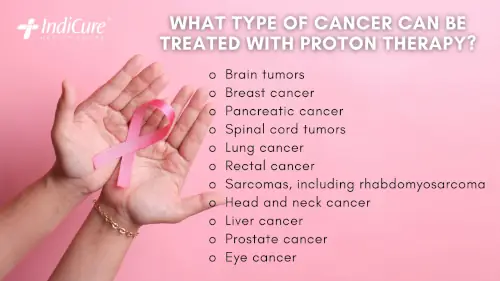
Here is a list of what type of cancer can be treated with proton therapy, all of which are available in India -
- Brain tumors
- Breast cancer
- Pancreatic cancer
- Spinal cord tumors
- Lung cancer
- Rectal cancer
- Sarcomas, including rhabdomyosarcoma
- Head and neck cancer
- Liver cancer
- Prostate cancer
- Eye cancer
-
What Are the Risks Associated with Proton Therapy?
Proton therapy allows for better targeting of the highest energy concentration, potentially affecting less healthy tissue, and causing fewer risks and side effects compared to traditional radiation therapy. However, some energy is still released into surrounding healthy tissue and the possible side effects of Proton therapy include fatigue, hair loss/ soreness/ redness around the body area being treated, etc. Side effects may also vary depending on the area being treated, like headaches in case of brain tumors, etc.
-
How Many Sessions Are Needed for Proton Therapy?
Most people undergo proton beam therapy five days a week and may need multiple sessions with the schedule varying depending on the type, size, and extent of cancer.
While Proton therapy is an excellent treatment option offering targeted and effective care that offers several benefits over conventional treatment options, its high cost cannot be overlooked. The procedure comes with a hefty price tag and can be all the more burdensome when a patient has to pay out of pocket. The average cost of Proton therapy in the USA ranges from about USD 100,000 to USD 150,000, and higher in some states, and may vary depending on the complexity of the cancer being treated and the number of sessions required, impacting the overall cost.
A large number of patients are thus forced to make difficult decisions, such as delaying treatments or opting for less effective options due to cost constraints. This not only impacts the patient's recovery but also places a strain on their overall well-being. Exploring alternative options such as financial assistance programs or avenues like medical tourism can be crucial in making advanced treatments, like proton therapy feasible.
Medical Tourism for Proton Therapy
In recent years, medical tourism has become a viable option for patients seeking high-quality and cost-effective healthcare solutions abroad. Among the many treatments that attract international patients, proton therapy has emerged as a groundbreaking option for those battling cancer. Proton therapy, an advanced form of radiation treatment, offers precision targeting of cancer cells while minimizing damage to surrounding healthy tissues. This revolutionary therapy has become a sought-after treatment for various types of cancer, including brain tumors, head and neck cancers, lung cancer, and pediatric cancers.
However, the high costs and limited availability of proton therapy centers in many countries have led patients to explore medical tourism destinations like India.
Proton therapy is not yet widely available in many parts of the world. Facilities offering this cutting-edge treatment are often concentrated in a few developed countries, where the cost can be prohibitively high.
For instance, in the United States or Europe, the price of proton therapy can run to USD 100,000 or more, depending on the type of cancer and the number of sessions required. These high costs, combined with long waiting times, prompt many patients to consider seeking treatment in countries like India, where advanced medical infrastructure and experienced healthcare professionals deliver care to the same international standards at a fraction of the cost.
Proton Therapy with IndiCure in India
IndiCure Health Tours plays a vital role in facilitating access to proton therapy and other advanced cancer treatments. With over 15 years of experience, IndiCure coordinates between international patients and India's top cancer hospitals, providing comprehensive support throughout the medical journey.
Patient Stories from IndiCure
IndiCure has coordinated cancer treatment for patients from around the world. From brain tumors to lung or prostate cancers, IndiCure has coordinated treatment for patients across a range of cancers. These stories show what seeking cancer treatment in India can involve. Here is one of the cancers treatment success stories facilitated by IndiCure Health Tours -

Mr. Andrew, diagnosed with prostate cancer, looked abroad for affordable and reliable treatment because of the cost at home. A Google search led him to IndiCure Health Tours in India, where he was impressed by their professional services and affordability. IndiCure facilitated every detail, from his medical visa to a video consultation with a top oncologist, which reassured him about the procedure.
Andrew underwent advanced robotic prostate cancer surgery at a leading Indian hospital, using a minimally invasive approach, which is associated with smaller incisions and a quicker recovery. With excellent post-operative care and a tailored recovery plan, Andrew's experience with IndiCure was seamless and highly satisfying. In the robotic prostate cancer surgery in India testimonial, he states -
"From the start, I was impressed by IndiCure's professionalism and efficiency. They made the medical visa process seamless and ensured I felt at ease upon arrival in India with a warm airport welcome. The skilled medical team provided exceptional care, delivering results beyond my expectations.
The warmth and hospitality of the Indian people, combined with IndiCure's genuine care and support, made my experience truly positive. I highly recommend IndiCure to anyone considering treatment abroad and wish them continued success in helping others."
Why Choose IndiCure for Proton Therapy?
- Access to Leading Hospitals and Oncologists: IndiCure partners with some of the best cancer hospitals in India equipped with cutting-edge proton therapy technology. These institutions are internationally accredited and staffed with India's top oncologists who have extensive experience in treating complex cancer cases.
-
Cost-Effective Treatment: By choosing IndiCure, patients can save a substantial part of proton therapy costs compared with treatment in Western countries, at hospitals accredited to international standards.
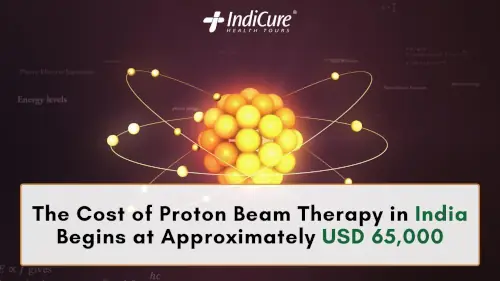
The cost of Proton Beam Therapy in India starts from about USD 65,000. However, the total expense can vary based on several factors, including your medical history, overall health condition, the type and stage of the cancer being treated, the expertise and experience of the treating physician, and the hospital and city you select for your treatment.
- Comprehensive Support Services: IndiCure provides end-to-end assistance, including medical consultations, visa facilitation, travel arrangements, and accommodation. Their dedicated team aims to make the experience smooth and stress-free for patients and their families.
- Personalized Care Plans: Understanding that every cancer case is unique, IndiCure passes your reports to the treating oncologists, who set out the treatment options, and then puts the plan and the cost in writing for you.
- Language and Cultural Support: For international patients, communication can be a barrier. IndiCure's multilingual team bridges the gap, ensuring clear communication between patients and medical staff.
Proton therapy has revolutionized cancer treatment, offering precision and effectiveness for various types of cancer. For those seeking this advanced therapy, India stands out as a destination that combines world-class medical care with affordability. If you're wondering what type of cancer can be treated with proton therapy, it is particularly useful for conditions like brain and spinal tumors, prostate cancer, head and neck cancers, lung cancer, and pediatric cancers.
Accessing proton therapy in India through IndiCure Health Tours is a well-supported experience. Patients not only benefit from cutting-edge treatment but also the renowned warmth and hospitality of India. IndiCure's dedicated team meticulously handles every detail of the medical journey, allowing patients and their families to focus entirely on recovery.
If you or your loved one is considering proton therapy, reach out to IndiCure Health Tours to explore your options. With their expertise and commitment to patient care, IndiCure will set out your options, what the treatment involves and what it will cost, so you can make the decision with your own doctors.


